
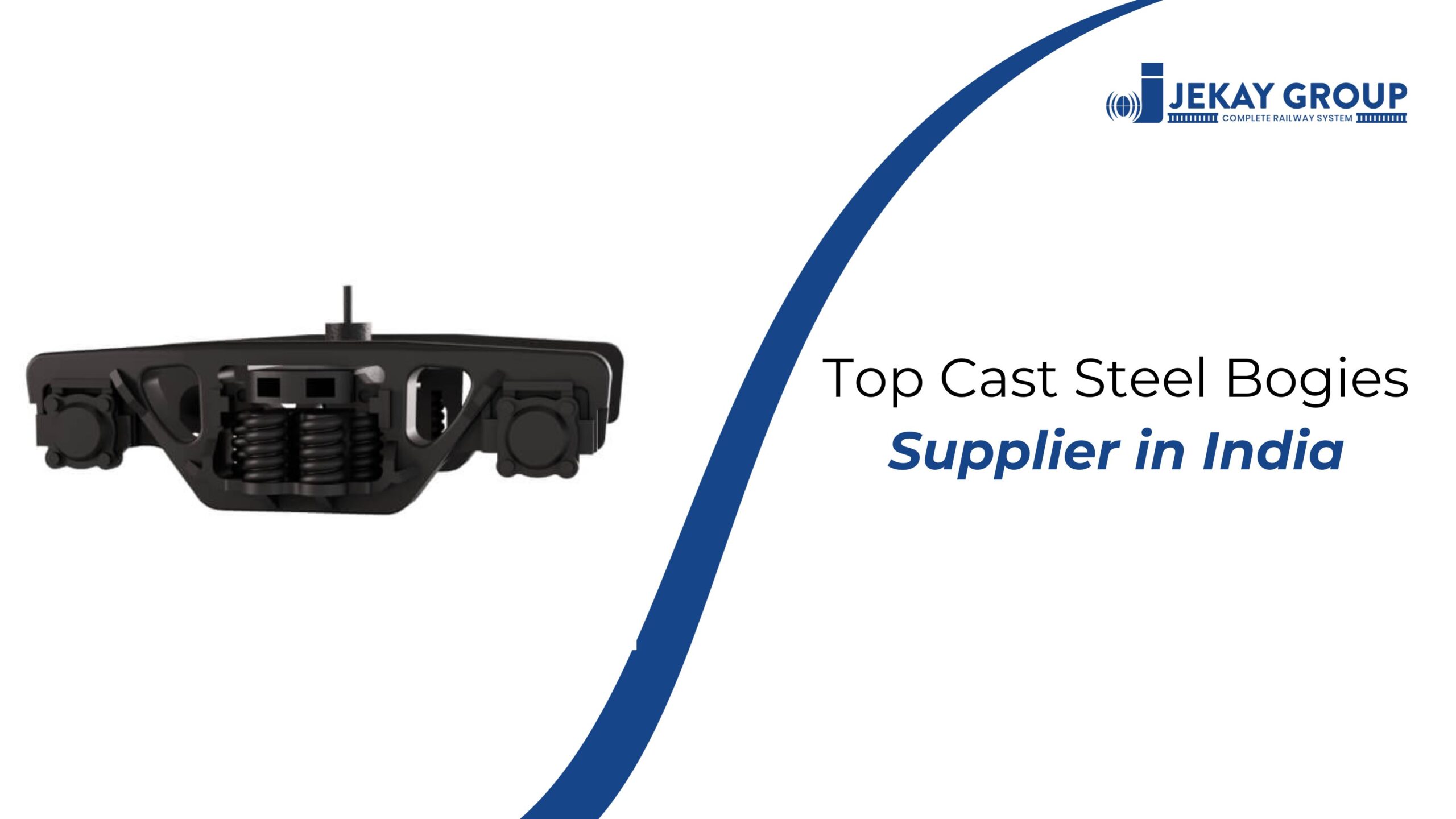
Introduction
Freight wagon failures trace back to one overlooked component—the bogie. Fabricated bogies crack under sustained heavy loads, welded joints fail on rough track sections, and poor weight distribution causes premature wheel wear. These failures cost operators lakhs in downtime, derailments, and emergency repairs. Most buyers don’t realize that cast steel bogies outlast fabricated alternatives by 40% in high-stress freight operations, yet procurement teams still default to cheaper options that fail faster.
This guide covers technical specifications, manufacturing excellence, and operational advantages that make cast steel the only viable choice for serious freight operations.
Overview of Popular Cast Steel Bogie Types
Casnub 22: Versatile Freight Standard
The Casnub 22 serves as India’s workhorse freight bogie. This three-piece design handles standard freight loads with proven reliability across diverse terrains and extended haul distances. Complete weight sits at 5.4 tonnes with standardized journal centres at 2260 mm ensuring cross-system compatibility.
Casnub 22NLB: Enhanced Load Management
The NLB variant advances the base Casnub 22 design through improved load distribution engineering. Maximum axle load capacity reaches 20.32 tonnes with operating speeds up to 80 km/h. Center plate height maintains 932 mm from rail level under tare conditions, optimizing wagon stability during loaded runs.
Casnub 22HS: High-Speed Freight Operations
Designed specifically for 100 km/h freight operations, the HS variant combines enhanced ride comfort with 22.9-tonne axle load capability. Center plate height ranges from 929 to 932 mm, providing precise alignment for modern high-speed freight. This specification matters because India’s freight modernization push demands 100 km/h capable equipment—older designs physically cannot support these speeds without compromising safety margins.
LWLH 25: Heavy Load Specialist
The LWLH 25 tackles extreme payload scenarios with 25-tonne maximum axle loads while maintaining 100 km/h speed capability. Lower center plate height at 726.5 mm accommodates specialized wagon designs requiring different clearance profiles. This variant serves bulk commodity operations where payload maximization directly impacts per-rake profitability.
LCCF: Challenging Terrain Operations
LCCF bogies handle heavier loads under difficult operating conditions including steep gradients and tight curve sections. The robust design prioritizes structural integrity over speed, making it ideal for mining and quarry operations with dedicated rail networks.
Materials and Engineering Excellence
Jekay’s cast steel bogies use high-grade alloy steel selected for strength, durability, and wear resistance. The manufacturing process starts with Electric Arc Furnaces melting railway scrap at controlled temperatures between 1680°C and 1700°C depending on application. Chemistry adjustment during tapping ensures low phosphorus and sulfur content critical for mechanical properties.
Heat treatment processes enhance material characteristics through controlled heating and cooling cycles. This refines grain structure, improves yield-to-tensile strength ratios, and relieves internal stresses from casting operations. The result: superior fatigue resistance compared to fabricated alternatives that rely solely on welding without comprehensive heat treatment.
Testing protocols verify mechanical properties through:
- Impact testing with 10-tonne tuff hammers
- Ultimate tensile strength measurements
- Hardness testing across critical load points
- Spectrometry for chemical composition verification
- Microscopy for grain structure analysis
Design Features and Innovations
Three-piece bogie construction separates side frames and bolsters, allowing independent movement that absorbs track irregularities. The floating bolster sits on side frames through nested spring arrangements, distributing loads evenly while reducing dynamic stresses during operation.
Manufacturing technology includes:
- No-Bake foundry technology for superior mould strength and surface finish
- CNC plano milling machines with 10-meter tables for precision machining
- Automated shot-blasting for consistent surface preparation
- Robotic welding systems delivering repeatable accuracy
Journal centres maintain standardized 2260 mm spacing with 2000 mm wheelbase across all variants, ensuring compatibility with existing wagon fleets and maintenance facilities.
Applications and Industry Use Cases
Cast steel bogies dominate Indian Railways freight operations. Coal transport from mines to power plants relies on Casnub configurations handling 60+ tonne payloads per wagon. Container freight operations use high-speed variants to compete with road logistics on time-sensitive routes. Steel plants moving raw materials and finished products depend on LWLH heavy-duty bogies for oversized loads.
The shift toward 100 km/h freight operations makes modern cast steel bogie specifications mandatory. Indian Railways produces over 300,000 wheels annually just to support existing bogie demands, indicating the massive scale of freight bogie requirements nationwide.
Why Choose Jekay for Cast Steel Bogies?
Jekay’s 600 bogie sets per month production capacity ensures consistent supply without procurement delays. Fully integrated in-house manufacturing eliminates third-party dependencies, reducing lead times and maintaining quality control throughout every production stage.
Our advantages include:
- RDSO-approved manufacturing processes and designs
- Complete metallurgical and mechanical testing laboratories on-site
- Advanced 3D modeling and process simulation before production
- Direct engineering consultation during specification development
- Comprehensive warranty coverage with field service support
FAQs
Q: How does cast steel compare to fabricated bogies for freight operations?
A: Cast steel bogies provide superior fatigue resistance and longer service life compared to fabricated alternatives. The continuous grain structure in castings eliminates welded joint weaknesses that cause premature failures in high-stress applications.
Q: What maintenance intervals apply to cast steel bogies?
A: Standard periodic overhaul schedules follow Indian Railways maintenance protocols. Cast steel construction typically extends service intervals due to superior wear characteristics and structural integrity under sustained loading.
Q: Can different bogie variants mix within the same wagon fleet?
A: All Jekay bogie variants maintain standardized journal centres and mounting dimensions, allowing operational flexibility. However, optimal performance comes from matching bogie specifications to specific wagon and payload requirements.
Q: What delivery timelines apply for bulk bogie orders?
A: Standard variant orders typically fulfill within 12-16 weeks from specification approval. Custom specifications may require additional engineering time depending on modification complexity.
Conclusion
Freight operations demand bogies engineered for sustained performance under extreme loads and varied track conditions. Cast steel construction delivers the durability, safety margins, and lifecycle economics that fabricated alternatives cannot match. Contact Jekay today to discuss your bogie requirements and delivery schedules.
Jekay: Cast Steel Bogies Built for India’s Freight Future.
Equip your freight operations with proven RDSO-approved cast steel bogies. Visit http://jekay.com/ to submit your technical specifications, schedule an engineering consultation, or request detailed proposals for your bogie fleet requirements.