
Introduction
Railway projects in Gujarat waste time and money on fish plate suppliers who can’t deliver RDSO-compliant documentation, miss dimensional tolerances, or ship late when track laying schedules are fixed. The right supplier eliminates procurement headaches by providing certified materials with complete inspection records and predictable lead times that match project phases.
This guide explains fish plate specifications, compliance requirements, quality verification methods, and supplier evaluation criteria specific to Gujarat’s railway infrastructure needs—so you can choose a partner who delivers precision-engineered joints that pass inspection the first time and perform reliably for 30+ years.
Understanding Fish Plate Requirements
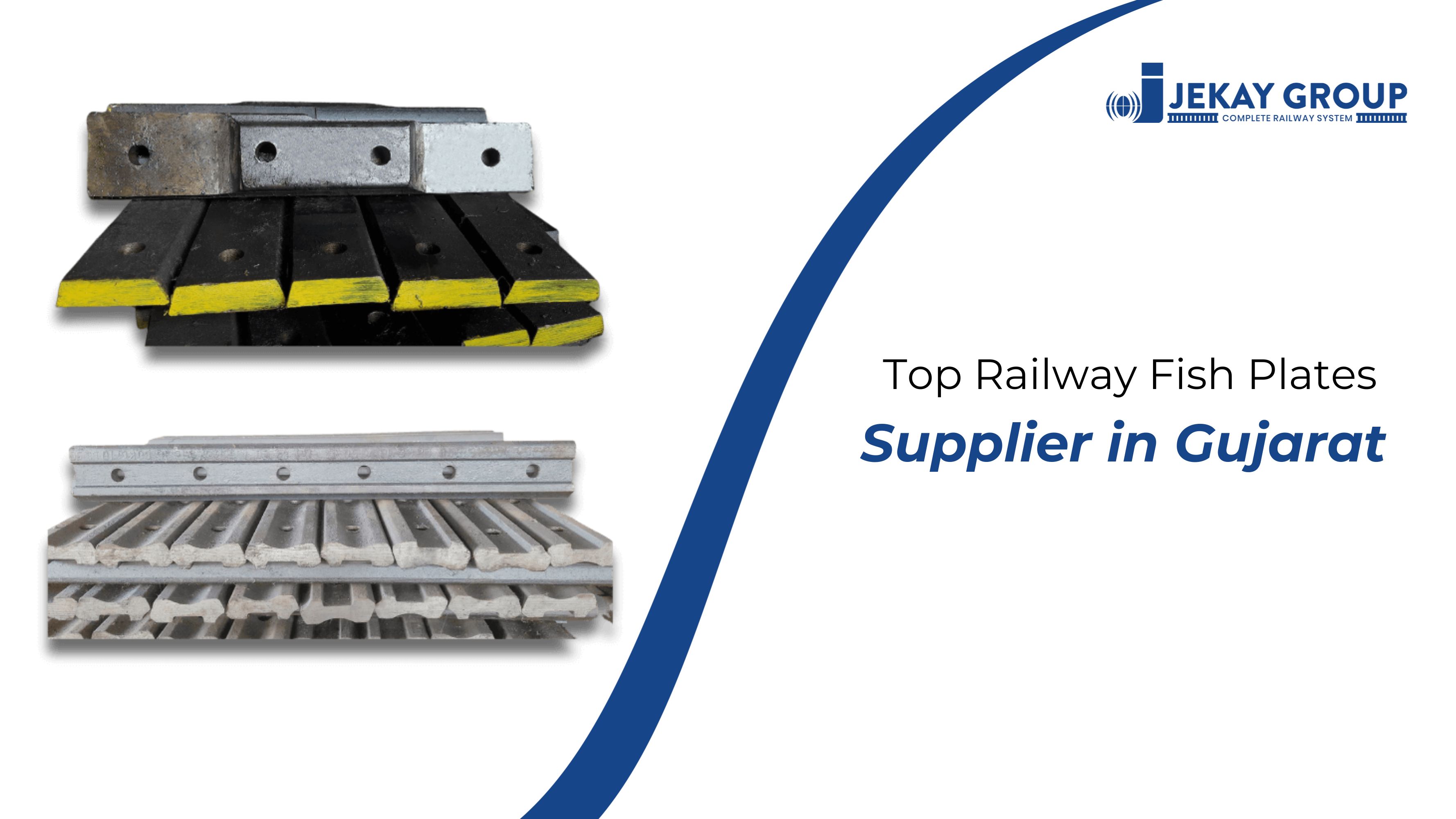
Fish plates join rail sections by clamping them together through bolted connections on both sides of the rail web. These components transfer vertical, lateral, and longitudinal forces across the joint while maintaining track alignment. Poor-quality fish plates create weak points where rails separate under traffic loading, causing derailments and costly emergency repairs.
The rail section determines the fish plate profile. A 52 kg/m rail requires different web thickness, bolt hole spacing, and overall dimensions than 60 kg/m sections. Using mismatched fish plates causes stress concentrations that accelerate fatigue cracking.
Standard vs. Specialized Types
Standard fish plates work for conventional bolted joints in tangent track and gentle curves. Joggled fish plates offset the bolt holes to avoid weakening the rail at critical cross-sections—these cost 15-20% more but extend joint life in heavy-traffic corridors. Compromise fish plates join dissimilar rail sections during track upgrades, though engineers prefer avoiding these transition joints when possible.
Glued insulated rail joints demand specialized fish plates with precise dimensional control and surface preparation requirements. These applications require suppliers with documented experience in insulated joint production.
RDSO Compliance and Documentation
IRS T-1-2012 specifications define material requirements, manufacturing tolerances, testing protocols, and acceptance criteria for railway fish plates in India. Suppliers without RDSO approval cannot bid on Indian Railway projects or major state infrastructure contracts. This certification proves manufacturing capability and quality system adequacy.
Inspection documentation requirements include:
- Material test certificates showing chemical composition and mechanical properties
- Dimensional inspection reports covering all critical measurements
- Heat treatment certificates when specifications require them
- Batch traceability linking finished products to raw material sources
- Final inspection certificates signed by authorized inspectors
Projects typically demand this documentation before payment release. Suppliers who delay paperwork create cash flow problems and contract disputes.
Purchaser Inspection Rights
Railway specifications grant buyers the right to inspect manufacturing processes and test finished products before dispatch. Suppliers must accommodate inspector visits, provide testing facilities, and demonstrate compliance with approved procedures. Choose suppliers with dedicated inspection areas and documented quality plans that inspectors already know and trust.
Material and Manufacturing Standards
Fish plates require killed steel manufactured through secondary refining to eliminate internal porosity and ensure consistent mechanical properties. The specification typically demands minimum tensile strength of 690 MPa, yield strength around 380 MPa, and elongation exceeding 14% to provide adequate ductility.
Carbon content between 0.40-0.50% balances strength and weldability. Manganese additions improve hardenability and impact resistance. Silicon acts as a deoxidizer and strengthens the ferrite matrix. Suppliers must provide mill test certificates documenting these chemical compositions for every steel batch.
Critical Manufacturing Controls
Rolling fish plate bars to profile requires precision that only dedicated rolling mills achieve. The fish plate cross-section must match gauge templates within specified tolerances—deviations cause poor rail contact and premature wear. Hole drilling demands accurate spacing and perpendicularity. Misaligned holes prevent proper bolt installation and reduce clamping force.
Surface defects including cracks, laps, seams, and excessive scale require rejection. A surprising reality: approximately 30% of fish plate rejections stem from surface quality issues rather than dimensional or mechanical property failures. Proper manufacturing controls prevent these costly rejections.
Quality Control Protocols
Incoming material inspection verifies that steel bars meet specification requirements before machining begins. This prevents wasting production resources on substandard materials. In-process checks catch dimensional deviations early when correction costs remain low. Final inspection provides the documented evidence that buyers and inspectors demand.
Testing frequency follows statistical sampling plans defined in railway standards. Typically one sample per batch undergoes full mechanical testing including tensile strength, yield strength, elongation, and hardness verification. Dimensional inspection covers 100% of production when hole spacing and profile accuracy matter critically.
Rejection and Retest Procedures
Failed tests trigger batch rejection unless retest provisions allow additional sampling. Most specifications permit one retest with double sample size when initial tests fall marginally below requirements. Repeated failures require complete batch rejection and return to the manufacturer. Strong quality control prevents these expensive scenarios.
Gujarat Supply Advantages
Gujarat’s location provides strategic advantages for railway projects across western and northern India. Reduced transportation distances cut freight costs and enable faster delivery compared to distant suppliers. The state’s industrial infrastructure supports just-in-time delivery for large projects where site storage space is limited.
Local suppliers respond faster to urgent requirements including specification clarifications, sample submissions, and emergency supplies when installation damage occurs. This responsiveness matters when track possession windows are fixed and delays cost thousands per hour in lost operations.
Capacity and Lead Time Realism
Verify actual production capacity through facility visits rather than accepting claimed numbers. Many suppliers overcommit and miss delivery schedules, delaying entire project phases. Ask for recent supply references and contact those buyers about delivery performance. Check current order backlogs and understand how your order fits the production queue.
Standard fish plates typically require 4-6 weeks lead time for lots exceeding 500 pieces. Custom profiles or special coatings add 2-3 weeks. Build these timelines into procurement schedules to avoid rushing suppliers into quality compromises.
Supplier Evaluation Framework
Technical Capability Assessment
Request manufacturer drawings and process flow documentation during pre-qualification. This reveals whether suppliers truly understand fish plate requirements or just match dimensions without grasping functional performance needs. Ask specific questions about heat treatment procedures, inspection equipment calibration, and batch traceability systems.
Suppliers with dedicated railway product divisions outperform those treating fish plates as secondary products. The specialized knowledge shows in documentation quality, inspector relationships, and problem-solving when field issues emerge.
Documentation Readiness
The best suppliers provide complete inspection packages within 48 hours of production completion. This includes MTCs, dimensional reports, test certificates, and compliance declarations ready for immediate submission to project authorities. Delays in paperwork delivery create payment holds and administrative friction that wastes project management time.
Verify that suppliers maintain proper record retention systems. Railway projects often require documentation retrieval years after delivery for warranty claims or failure investigations.
Cost vs. Value Analysis
Lowest price bids often signal quality shortcuts that create rejection risk and schedule delays. Calculate total procurement cost including:
- Base material price per piece
- Inspection and testing charges
- Transportation to site
- Potential rejection and replacement costs
- Administrative burden for documentation issues
Premium suppliers charging 8-12% more than cheapest alternatives typically deliver lower total cost through first-pass acceptance, complete documentation, and on-time delivery.
FAQs
Q: How do I quickly identify the right fish plate for my rail section?
A: Fish plates match rail sections by weight per meter (52 kg, 60 kg, etc.) and profile designation. Reference IRS T-1-2012 drawings that specify dimensions, hole spacing, and bolt requirements for each rail type. Provide your rail section designation and drawing number to suppliers for accurate quotations. Verify that supplier proposals reference correct drawing numbers.
Q: What inspection documents should accompany each fish plate delivery?
A: Every lot requires material test certificates showing chemical composition and mechanical properties, dimensional inspection reports covering length, thickness, hole positions and profile accuracy, and final inspection certificates signed by qualified inspectors. Glued joint applications need surface finish verification reports. Retain all documentation for warranty support and future reference.
Q: When should I specify joggled fish plates instead of standard types?
A: Joggled fish plates prevent bolt holes from coinciding with rail bolt holes, reducing stress concentration in the rail web. Specify these for curves tighter than 600m radius, heavy-haul corridors with axle loads exceeding 25 tons, and joints experiencing repeated failures with standard fish plates. The 15-20% price premium pays back through extended joint life.
Q: Can Gujarat suppliers handle rush orders for emergency track repairs?
A: Established suppliers maintain buffer stock of common fish plate types for standard rail sections. Emergency orders for 50-100 pieces typically ship within 3-5 days if stock is available. Custom profiles or large quantities require normal 4-6 week lead times. Build relationships with suppliers before emergencies occur to ensure priority handling when urgent needs arise.
Q: How do I verify RDSO compliance beyond checking certificates?
A: Request RDSO approval letter copies and verify validity through Indian Railways RDSO website. Visit manufacturing facilities to observe production processes and inspection procedures. Review recent supply references for similar railway projects and contact those buyers about compliance experiences. Request participation in witness testing during production runs.
Conclusion
Choosing the right fish plate supplier in Gujarat determines whether your railway project maintains schedule and passes inspection without rejection headaches. Focus on RDSO compliance, documentation capability, and proven delivery performance rather than lowest price alone. Visit jekay.com now to connect with Gujarat’s leading RDSO-certified fish plate manufacturer equipped with advanced quality systems, complete documentation support, and 40+ years of railway infrastructure expertise—request a technical consultation today and discover why leading contractors trust our precision-engineered fish plates to pass the toughest inspections while meeting your most demanding delivery schedules.