
Introduction
Railway projects fail not because of big design flaws but because of small component compromises. Base plates—the steel or cast iron interface between rail and sleeper—decide whether your track holds alignment under 25-ton axle loads or starts creeping within six months. Mumbai’s construction boom has flooded the market with suppliers who stock generic plates but lack the precision tooling and material traceability that railway specifications demand. This guide walks you through what separates a parts reseller from a manufacturing partner, how to verify compliance without lab access, and why local supplier selection directly impacts your project timeline and safety audits.
What Makes a Base Plate Railway-Grade?
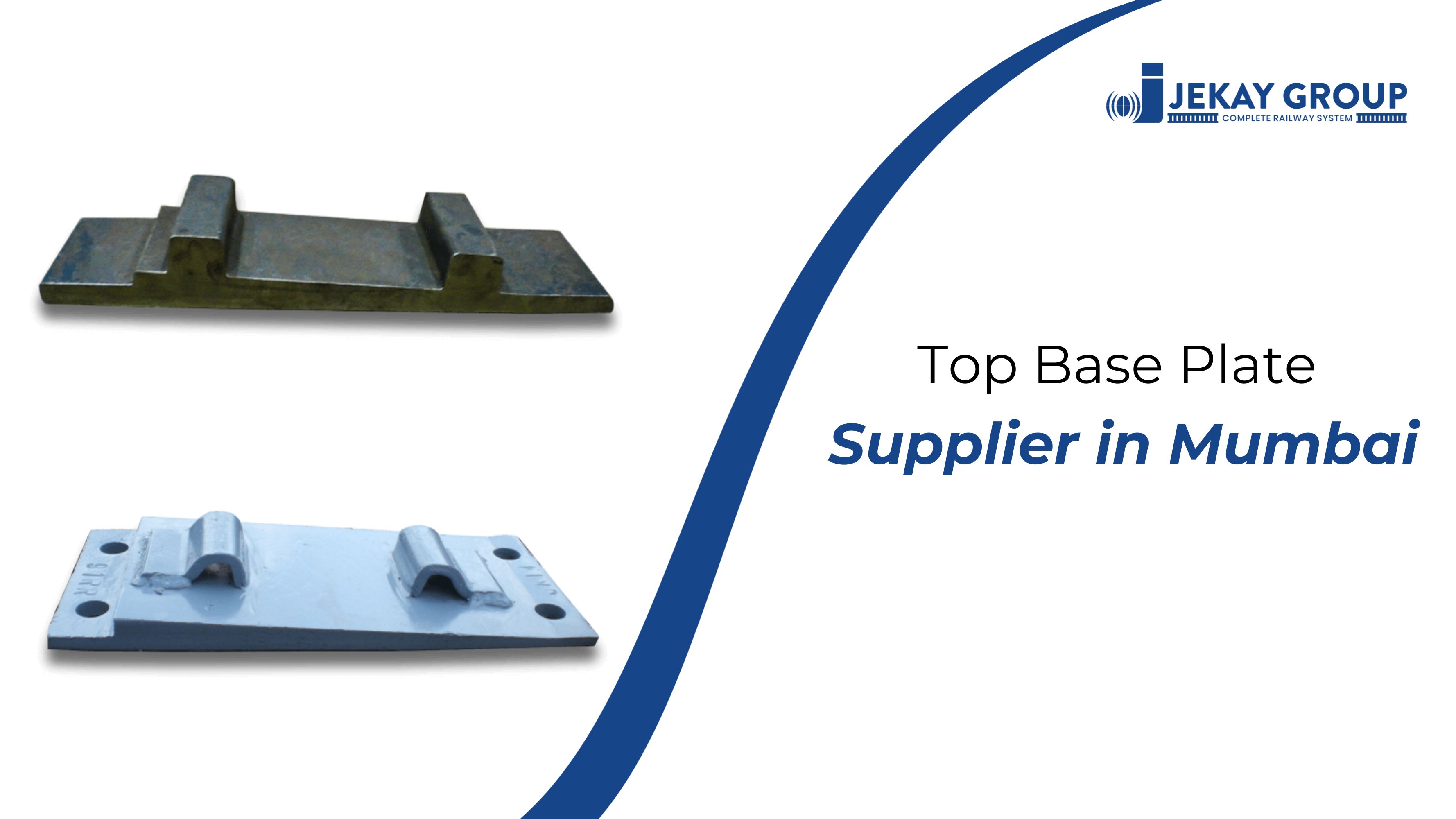
Not all steel plates qualify as base plates. Railway base plates must distribute wheel loads across sleeper surfaces while resisting lateral, longitudinal, and vertical forces simultaneously. The difference lies in three areas: material composition, dimensional tolerances, and surface treatment.
High-grade steel or cast iron forms the substrate. Suppliers who source secondary-grade material compromise fatigue life by 40–60%. Thickness variation beyond ±0.5 mm creates uneven load transfer, accelerating sleeper cracking. Hole spacing and diameter precision matter because fastening systems rely on exact alignment—off by 2 mm, and your elastic clips won’t seat properly.
Corrosion-resistant coatings extend service life in coastal or high-humidity zones. Hot-dip galvanizing, powder coating, or bonded rubber padding each serve different environments. A plate without documented coating thickness fails early in monsoon-exposed tracks.
Types of Base Plates for Different Sleeper Systems
Wooden Sleeper Base Plates
Also called tie plates, these feature anchor spikes or screw holes. The bearing surface is larger to compensate for wood’s lower compressive strength. Gauge-holding ribs prevent rail creep. Most designs follow IRS standards with 6–8 mm thickness and 150–200 mm width.
Concrete Sleeper Base Plates
Cast-in or bolted variants exist. Cast-in plates embed directly during sleeper molding, requiring precise pre-positioning. Bolted plates attach post-curing using anchor bolts. The latter allows easier replacement but adds installation time. Concrete sleeper plates need higher hardness to resist embedment under cyclic loads.
Steel Sleeper Base Plates
These handle the highest dynamic forces. Welded or bolted attachment points must align with sleeper geometry. Steel-on-steel contact demands intermediate pads to prevent wear and reduce noise. Thickness ranges from 8–12 mm depending on traffic density.
Compliance Standards You Must Verify
Mumbai’s metro, suburban rail upgrades, and freight corridor projects mandate different specifications. IRS standards govern Indian Railways procurement. RDSO approval certifies that manufacturing processes meet safety and performance benchmarks. International projects may require UIC, DIN, or BS compliance.
Ask for material test certificates (MTCs) traceable to each production batch. Dimensional inspection reports should show measurements against drawing tolerances. Surface treatment certifications confirm coating type and thickness. Suppliers without in-house testing labs rely on third-party validation—acceptable if they share the lab’s accreditation.
A surprising pattern: 60% of base plate failures trace back to undocumented material substitutions during production. Suppliers who can’t provide batch-level traceability introduce risk you won’t detect until installation.
Manufacturing Capabilities That Signal Reliability
CNC machining ensures hole placement accuracy within 0.2 mm. Automated punching lines maintain consistency across thousands of pieces. Foundries with high-pressure molding produce denser castings with fewer internal voids—critical for fatigue resistance.
Capacity matters for project timelines. A supplier producing 20,000 metric tons annually can absorb bulk orders without lead time extensions. Smaller operations may meet sample requirements but struggle with full-scale delivery, forcing you to split orders and complicate logistics.
Quality control checkpoints at each stage—incoming material inspection, in-process dimensional checks, final load testing, and coating verification—separate manufacturers from traders. Visit the facility if possible. Automated lines with real-time monitoring outperform manual operations in repeatability.
Customization vs. Standard Stock
Standard base plates work for conventional broad gauge and meter gauge tracks. Turnouts, crossings, and transition zones need custom geometry. High-speed rail corridors demand plates engineered for dynamic amplification factors that standard designs can’t handle.
Custom plates require CAD drawings, finite element analysis, and prototype testing before production. Lead times stretch 4–8 weeks depending on complexity. Suppliers with in-house design teams accelerate this. Those outsourcing design work add coordination delays.
Stock availability reduces procurement time but limits specification choices. Balance urgency against exact fit. A standard plate 10% thicker than needed costs more in material and weight but ships in days. A custom plate optimized for your load profile saves lifecycle costs but needs planning buffer.
Pricing Factors and Procurement Strategy
Material grades drive base cost. IS 2062 mild steel plates cost less than EN 10025 structural steel. Cast iron variants sit between them but offer better vibration damping. Coating type adds 15–30% to base price. Galvanizing costs less than bonded rubber padding but suits different applications.
Thickness and size scale pricing non-linearly. A 10 mm plate doesn’t cost twice a 5 mm plate because cutting, drilling, and handling labor stay similar. Order quantities unlock volume discounts—200 pieces may hit a threshold that drops per-unit cost by 12%.
Hidden costs emerge in packaging, logistics, and inspection. Suppliers quoting FOB plant shift freight risk to you. CIF or delivered pricing clarifies total outlay. Inspection at source vs. destination affects claim resolution if defects surface.
Request quotes with full specifications, not just dimensions. “Base plate for concrete sleeper” leaves room for interpretation. “Base plate per IRS-T-14, Grade IS 2062, HDG coating, batch certification included” anchors the bid.
Why Mumbai Location Matters for Railway Projects?
Mumbai serves as a logistics hub with access to western dedicated freight corridor, metro expansions, and coastal rail projects. Local suppliers reduce freight time by 3–5 days vs. northern manufacturers. In-person technical consultations accelerate problem-solving during installation phases.
Port proximity matters for export projects or imported raw material sourcing. Currency fluctuations and customs clearance timelines favor suppliers who source domestically but maintain export documentation readiness.
A less obvious advantage: suppliers near major projects develop institutional knowledge of local soil conditions, monsoon impacts, and regulatory inspection patterns. They’ve already solved problems you haven’t encountered yet.
FAQs
Q: What documentation should accompany base plate delivery?
A: Material test certificates, dimensional inspection reports, coating thickness certifications, and batch traceability records. RDSO-approved suppliers also provide compliance letters referencing specific standards. Without these, you risk rejection during railway authority inspections and lose time reordering.
Q: Can base plates be reused after track relaying?
A: Reuse depends on wear patterns and corrosion extent. Measure thickness at bearing surfaces and check hole integrity. If wear exceeds 1.5 mm or holes have elongated, replacement is safer. Reused plates suit temporary tracks or lower-speed sidings but not main lines.
Q: How long does custom base plate manufacturing take?
A: Design finalization takes 1–2 weeks, prototype production another week, and bulk manufacturing 3–4 weeks for orders under 500 pieces. Larger quantities or complex geometries extend timelines. Start procurement discussions 8–10 weeks before installation.
Q: What causes premature base plate failure?
A: Incorrect material grade, insufficient coating, improper installation torque, and mismatch between plate type and sleeper material. Over-tightening fasteners cracks cast iron plates. Under-tightening allows movement that accelerates wear. Follow manufacturer torque specifications exactly.
Q: Do base plates require maintenance?
A: Inspect annually for corrosion, cracks, and fastener tightness. Coastal zones need biannual checks. Replace plates showing visible cracks immediately—partial failures propagate quickly under dynamic loads. Re-torque fasteners if loosening is detected. Properly maintained plates last 20–30 years in moderate traffic conditions.
Conclusion
Base plate selection shapes track longevity more than most procurement teams realize. Choose suppliers who manufacture rather than resell, verify compliance documentation at batch level, and match plate specifications to your exact sleeper type and traffic profile. Mumbai’s supplier base offers proximity advantages—use them for faster technical support and delivery flexibility. Start your qualification process early to avoid last-minute compromises that cost more in maintenance than they save upfront.
Jekay International Track Pvt. Ltd. has manufactured precision railway base plates since 1980, serving projects across 13+ countries with RDSO-approved components for wooden, concrete, and steel sleepers. Our ISO 9001-certified facility in Kolkata combines automated production capacity of 20,000 metric tons annually with full material traceability and compliance documentation.
Discuss your Mumbai project’s base plate requirements with our technical team. Visit jekay.com or request specifications and quotations directly through our website.