
Introduction
Railway and metro projects in Pune face delays when elastic fastenings fail toe load tests during commissioning inspections. These failures trigger re-procurement cycles, batch rejections, and schedule slippage that cost lakhs in idle equipment and labor. The right supplier eliminates these risks by delivering RDSO-approved elastic rail clips with documented toe load consistency and complete inspection records. This guide explains fastening system requirements, IRS T-31-2021 compliance parameters, toe load verification methods, and Pune supplier evaluation criteria—so you can specify components that pass inspection the first time and maintain rail restraint for 20+ years without clip replacement.
Understanding Elastic Fastening Systems
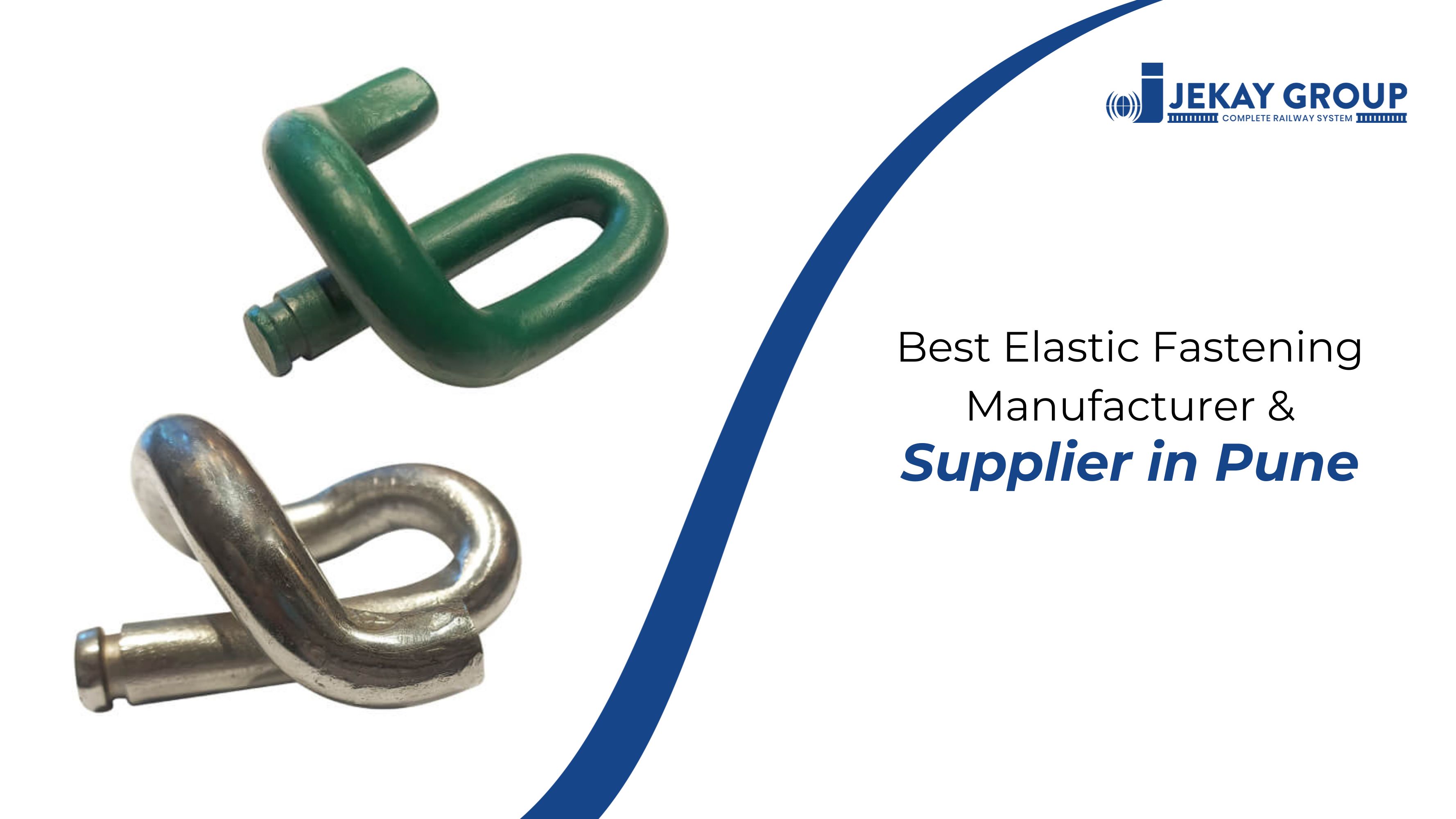
Elastic fastenings secure rails to sleepers through spring clips that apply controlled clamping force while allowing limited vertical movement. This flexibility absorbs dynamic loads from passing trains without loosening or fatiguing prematurely. The system includes elastic rail clips (ERC), rail pads that dampen vibration, liners for electrical insulation, and shoulder anchors or screws that retain clips.
Toe load—the downward force the clip exerts on the rail foot—determines restraint effectiveness. Insufficient toe load allows rail creep and gauge widening. Excessive force damages rail feet and accelerates clip fatigue. IRS T-31-2021 specifies toe load ranges that balance these competing requirements.
Direct vs. Indirect Fixation
Direct fixation systems attach rails directly to concrete sleepers or slab track using embedded inserts. These work for metro systems and high-speed corridors requiring superior track geometry. Indirect fixation uses separate base plates on steel or concrete sleepers—the traditional approach for Indian Railways broad gauge networks.
Pune’s metro expansion and nearby railway corridor upgrades create demand for both configurations. Suppliers must demonstrate capability across multiple fastening types rather than specializing in one variant.
Common Elastic Rail Clip Types
Round Toe and Flat Toe Clips
Round toe clips provide point contact that concentrates clamping force efficiently but may indent soft rail steel. Flat toe designs distribute force across wider bearing areas, reducing rail foot damage. Modern specifications increasingly favor flat toe geometry for heavy-haul applications.
Mk-II, Mk-III, and Mk-V Variants
Indian Railways developed these standardized designs for different sleeper configurations. Mk-III clips work with PSC sleepers featuring cast-iron shoulders. Mk-V variants suit newer sleeper designs with modified shoulder geometry. A surprising fact: approximately 70% of field fastening failures stem from using wrong clip variants rather than manufacturing defects. Match clip type to exact sleeper specification.
J-Clips and Special Profiles
J-shaped clips provide lateral restraint for curves and transitions where rail tends to roll or shift sideways. Tight curves below 400m radius often require these specialized profiles. Custom designs serve unique metro and light rail applications where standard patterns don’t fit.
RDSO Compliance Requirements
IRS T-31-2021 defines manufacturing standards, testing protocols, and acceptance criteria for elastic rail clips. This specification mandates spring steel grades, heat treatment parameters, dimensional tolerances, and performance verification methods. Suppliers without RDSO approval cannot participate in Indian Railway or metro tenders.
Vendor approval requires submitting quality assurance plans (QAP), demonstrating manufacturing capability through factory inspections, and passing prototype testing at RDSO labs. Approved vendors receive vendor registration that validates their production systems.
Key Performance Parameters
Toe load at installation typically ranges from 8-12 kN depending on clip design and application requirements. The clip must maintain at least 6 kN after 2 million load cycles to ensure long-term restraint. Hardness values between 380-440 HV provide the balance of strength and ductility that prevents brittle fracture.
Application force—the energy needed to install clips—shouldn’t exceed limits that would damage clips or injure track workers. Excessive installation force signals improper heat treatment or dimensional errors.
Manufacturing Process Controls
Heat Treatment Precision
Elastic clips start as spring steel bars that undergo hot forming at temperatures around 850-950°C to shape the profile. Oil quenching follows immediately to achieve martensitic structure that provides high strength. Tempering at controlled temperatures (typically 420-480°C) reduces brittleness while maintaining hardness in the specified range.
Temperature control during tempering determines final mechanical properties. Variations of just 20°C shift hardness by 30-40 HV units—enough to cause batch rejection. Automated furnaces with verified temperature uniformity prevent these costly failures.
Mandatory Crack Detection
100% magnetic particle inspection detects surface cracks after cutting and forming. Even hairline cracks propagate under cyclic loading and cause premature failures. Reject any supplier who treats crack detection as optional or samples only portions of production.
Profile machining or grinding creates final dimensions that must match gauge templates within 0.5mm tolerances. Out-of-tolerance clips won’t seat properly against rails or shoulders, reducing effective toe load.
Testing and Inspection Protocols
Lot-Based Sampling
IRS T-31-2021 defines lots as production batches not exceeding 2000 clips from the same heat treatment cycle. Random sampling selects test specimens following AQL (Acceptable Quality Level) principles. Typical sampling plans require 13 samples per lot for routine testing.
Tests performed on every lot include:
- Hardness verification at multiple locations on each sample
- Toe load measurement using calibrated testing rigs
- Dimensional inspection covering 15+ critical parameters
- Application/removal force testing to verify installation characteristics
Advanced Approval Testing
Initial vendor qualification requires fatigue testing where clips undergo 2 million load cycles at specified deflection ranges. This simulates 20+ years of field service under normal traffic. Clips must maintain minimum toe load after cycling to demonstrate long-term performance capability.
Stress rupture testing verifies that clips maintain elastic behavior without permanent deformation or cracking. These expensive tests happen during approval and after significant process changes—not on routine production lots.
Pune Supply Advantages
Pune’s position as a major railway hub and growing metro city creates concentrated demand for elastic fastenings. Local suppliers reduce transportation costs and enable faster response to urgent requirements compared to distant manufacturers. The city’s established industrial infrastructure supports quality steel sourcing and heat treatment services.
Metro Line 3 construction and Western Railway corridor upgrades generate steady fastening demand that local suppliers understand better than distant competitors. This local knowledge translates to better technical support and realistic delivery commitments.
Lead Time Realities
Standard ERC types from approved suppliers typically require 4-6 weeks for lots exceeding 10,000 pieces. This includes raw material procurement, heat treatment, testing, and RDSO inspector availability for witnessing tests. Rush orders compress timelines but increase rejection risk when heat treatment and cooling cycles get shortened inappropriately.
Supplier Selection Framework
Non-Negotiable Requirements
Verify current RDSO approval status through official vendor lists rather than accepting outdated certificates. Visit manufacturing facilities to observe heat treatment controls, testing equipment calibration status, and inspection record keeping. Ask for recent supply references from similar metro or railway projects and contact those buyers about delivery and quality performance.
Check testing laboratory accreditation and gauge calibration records. Suppliers using uncalibrated equipment or poorly maintained testing rigs produce unreliable results that won’t stand up to purchaser inspection.
Documentation Capability
The best suppliers provide complete inspection packages within 24-48 hours of lot completion. This includes raw material MTCs, heat treatment charts, test reports covering all required parameters, dimensional inspection records, and final compliance certificates. Documentation delays create payment holds and schedule friction.
FAQs
Q: Which elastic rail clip type should I specify for PSC sleepers on broad gauge freight corridors?
A: Mk-III flat toe clips suit most PSC sleeper applications on Indian Railways broad gauge. Verify exact sleeper drawing number and shoulder configuration before finalizing clip selection. Specify toe load range of 9-11 kN at installation for heavy freight service. Request supplier confirmation that proposed clips match your sleeper’s shoulder geometry and insert positioning.
Q: What toe load should I verify during the incoming inspection?
A: Test 5-10 clips per lot using calibrated toe load testing rigs. Measure force at standard deflection specified in IRS T-31-2021 for your clip type (typically 8-10mm deflection). All samples must fall within contracted toe load range with less than 15% variation between maximum and minimum values. Reject lots with outliers exceeding specification limits.
Q: What documents must accompany each elastic clip delivery?
A: Demand material test certificates for steel showing chemical composition and mechanical properties, heat treatment charts recording time-temperature profiles, test reports covering hardness, toe load, dimensions, and application force, inspection certificates signed by authorized inspectors, and batch traceability marking linking delivered clips to these records. Verify inspector credentials before accepting lots.
Q: How do I plan inspection schedules without delaying track laying?
A: Coordinate with suppliers and RDSO inspectors 2-3 weeks before planned testing dates. Schedule testing to complete 1 week before required delivery dates, allowing time for documentation and transportation. Maintain buffer stock of approved clips for emergency needs. Plan multiple smaller lots rather than single large batches to spread inspection burden and reduce rejection impact.
Q: Can Pune suppliers handle metro and Indian Railways requirements simultaneously?
A: Yes, but verify specific approval scope. Some suppliers hold RDSO approval only for certain clip types. Metro projects may require additional qualifications or acceptance testing beyond standard IR approvals. Request copies of actual approval letters showing authorized product range rather than accepting general claims of RDSO registration.
Conclusion
Choosing the right elastic fastening supplier in Pune determines whether your railway or metro project maintains schedule and passes commissioning inspections without rejection delays. Verify RDSO approval, testing capability, heat treatment controls, and documentation discipline rather than defaulting to familiar names or lowest bids.
Connect with jekay.com today to source RDSO-approved elastic fastenings manufactured under controlled heat treatment processes with verified toe load consistency, complete inspection documentation, and 40+ years of railway component expertise—request technical specifications now and discover why leading contractors trust our precision-engineered elastic rail clips to pass the toughest inspections while meeting your most demanding delivery schedules across Pune’s railway and metro projects.