
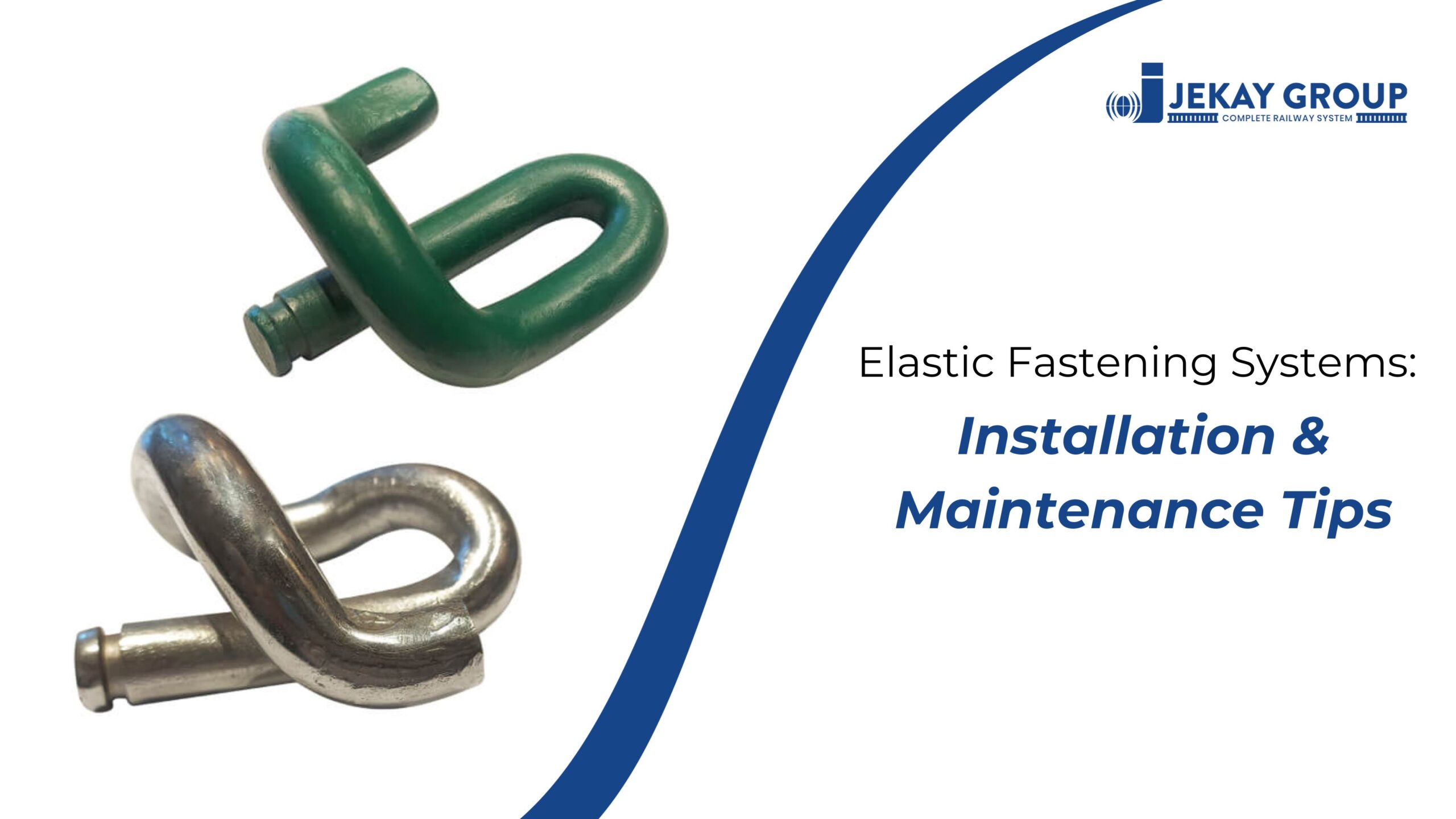
Introduction
Elastic fastening systems lose 30-40% of design toe load within the first year when installed incorrectly—not because the components fail, but because installation sequences, pad seating, and clip engagement get treated as minor details. Railways invest in premium elastic systems expecting 25-year service life and reduced maintenance, then wonder why gauge shifts or clips crack prematurely. The difference between systems that deliver on performance promises and those that disappoint comes down to installation discipline and targeted maintenance.
This guide provides step-by-step installation procedures, torque verification methods, inspection routines, and troubleshooting protocols that preserve elastic fastening performance across full service life. You’ll learn the critical installation sequences, maintenance intervals by traffic type, and defect patterns that signal problems before they cause failures.
Elastic Fastening System Basics
Elastic fastening systems secure rails to sleepers through spring-loaded clips generating 12-18 kN toe load. Unlike rigid spike systems, elastic assemblies maintain clamping force as components wear and rails experience thermal expansion.
A complete assembly includes elastic rail clips (the spring element), rail pads (vibration damping layer), liners or insulators (gauge setting and electrical isolation), base plates (load distribution), and sleeper shoulders or inserts (clip bearing points).
These components function as an integrated mechanical system. Changing pad thickness by 1mm alters clip engagement geometry enough to reduce toe load by 10-15%. Installing liners backward shifts rail position by 2-3mm. Installation quality determines whether the system delivers design performance or underperforms despite using specification-compliant components.
Pre-Installation Checklist
Sleeper and Rail Seat Preparation
Clean all rail seats of concrete laitance, rust, dirt, and foreign material. Contamination prevents full pad contact, reducing effective bearing area by 20-30% and concentrating loads that damage pads prematurely.
Inspect cast shoulders or inserts for cracks, dimensional accuracy, and proper orientation. Damaged shoulders reduce effective toe load and create stress concentrations that accelerate clip fatigue.
Component Verification
Match rail profile to clip design specification. Clips designed for 52kg rail won’t achieve proper toe load on 60kg rail—the rail foot thickness difference alters engagement geometry fundamentally.
Verify pad thickness matches design specification within ±0.5mm. Variation beyond this tolerance changes rail height relative to clip position, affecting toe load significantly.
Check liner orientation markings. Many designs have distinct inside/outside faces—reversing them shifts gauge by 2-3mm even though the liner “fits.”
Tooling Requirements
Manual installation needs lever bars with proper bearing surfaces to avoid damaging clip shoulders. Bent tools create uneven seating that reduces toe load.
Mechanized clip applicators deliver consistent results at 200-300 clips per hour versus 60-100 manually. However, applicator settings must match specific clip and shoulder geometry—using wrong settings damages clips or fails to achieve full seating.
Step-by-Step Installation
Recommended Assembly Sequence
- Place rail pad on clean rail seat, ensuring any grooves or orientation features align correctly with rail direction
- Position rail on pad, verifying gauge and alignment before proceeding
- Install side liners or insulators against rail foot, checking proper orientation and full seating
- Insert elastic clip, engaging sleeper shoulder first, then forcing over rail foot in one smooth motion
- Verify full seating by checking clip shoulder sits flush against sleeper insert with no gaps
This sequence ensures each component supports the next. Installing clips before pads seat fully creates voids that allow pad shifting under traffic.
Manual vs. Mechanized Installation
Manual installation depends heavily on operator skill and fatigue. First-hour productivity runs 80-100 clips; sixth-hour productivity drops to 40-60 as fatigue degrades technique.
Mechanized applicators maintain consistent force and seating throughout the shift. However, they require proper calibration—excessive force damages clips, insufficient force leaves them partially seated with 30-40% toe load loss.
Field data shows manually installed clips vary ±2-3 kN in toe load across a project. Mechanized installation tightens variation to ±1 kN, delivering more predictable long-term performance.
Torque and Seating Verification
Elastic clip systems generate toe load through spring deflection—no torque specification applies to the clips themselves. However, systems incorporating screw spikes or anchor bolts (for base plates or shoulders) require proper torque.
Torque Ranges
Screw spikes into concrete sleepers: 200-300 Nm depending on spike diameter (typically M20-M24). Over-torque cracks concrete around the insert; under-torque allows loosening under vibration.
Base plate anchor bolts (where applicable): 150-250 Nm. These provide vertical restraint rather than clamping—excessive torque crushes pads without improving performance.
Toe Load Verification
Measure toe load on representative samples using calibrated load cells inserted between clip and shoulder. Industry practice calls for checking 5 clips per 1,000 installed (0.5% sample rate).
Acceptable variation runs ±1 kN from design specification. Wider spreads indicate installation inconsistency—bent tools, damaged shoulders, or incorrect component sequencing.
Quick field checks involve visual inspection for full clip seating and trying to lift the clip shoulder away from the sleeper insert using hand force. Properly installed clips resist this test; partially seated clips show visible gaps or lift slightly.
Maintenance Philosophy for Elastic Systems
Elastic fastenings cut routine maintenance by 60-70% versus conventional spike systems. They eliminate periodic torque checking (no bolts to re-tighten) and reduce tamping frequency through superior vibration damping.
However, elimination of routine maintenance doesn’t mean zero maintenance. Elastic systems still require periodic inspection to catch component wear, environmental degradation, and installation defects before they cause failures.
Inspection frequency scales with traffic intensity. Heavy-haul lines (25+ million gross tonnes annually) need annual comprehensive inspections. Medium-traffic routes inspect every 2-3 years. Light sidings extend to 4-5 year intervals.
Inspection and Defect Identification
Visual Inspection Protocol
Walk the track examining clips for visible cracks (typically at bend radius or shoulder engagement points), permanent deformation (clips that don’t spring back when lifted), and corrosion pitting exceeding 0.5mm depth.
Check pads for excessive compression—permanent set exceeding 25% of original thickness indicates replacement needed. Look for pad extrusion beyond rail foot edges, signaling wrong stiffness grade or excessive loading.
Inspect liners for wear-through at rail contact faces. Material loss exposing 50%+ of liner thickness means immediate replacement to preserve electrical isolation and gauge control.
Detecting Toe Load Loss
Formal toe load measurement requires calibrated load cells. Field indicators include gauge widening at specific locations (compare joint gauge to mid-panel gauge—differences exceeding 3mm suggest local toe load loss) and visible gaps between clip shoulders and sleeper inserts.
Rail seat abrasion—metal transfer marks on the pad surface indicating relative movement—signals insufficient clamping force allowing rail micromotion.
Common Defects and Preventive Actions
Liner Wear and Gauge Shift
Liners in curves and heavy braking zones wear faster from lateral forces. Inspection every 12-18 months in these locations catches problems before gauge exceeds tolerance limits.
Switching to glass-filled nylon from standard nylon extends wear life by 30-40% in demanding applications. The material costs 15-20% more but reduces replacement frequency proportionally.
Rail Pad Crushing
Permanent pad compression stems from material aging, wrong stiffness selection, or excessive static loads. Aging typically manifests after 15-25 years; premature crushing within 5-10 years indicates specification mismatch.
Replacing crushed pads restores vertical track geometry and re-establishes proper clip engagement angles. Delaying pad replacement by even 2-3 years accelerates clip wear and shoulder damage, multiplying eventual repair costs.
Clip Fatigue and Cracking
Clips crack from manufacturing defects (improper heat treatment), installation damage (bent during forcing), or end-of-life fatigue accumulation. Cracking typically initiates at stress concentration points—bend radius, shoulder engagement, or rail foot contact area.
Replace cracked clips immediately—they provide drastically reduced toe load (40-60% loss) and can fracture completely under heavy wheel loads.
Sleeper Shoulder Damage
Cast concrete shoulders crack from excessive installation force, traffic vibration fatigue, or poor concrete quality. Damaged shoulders reduce clip bearing area and create uneven toe load distribution.
Minor cracks (under 2mm width, no material loss) monitor quarterly. Major cracks or material spalling require shoulder repair or sleeper replacement to restore fastening integrity.
Repair and Replacement Procedures
Component replacement follows clear decision trees. Replace pads when permanent compression exceeds 25% or stiffness testing shows 40%+ increase from new-pad values. Replace liners when wear exceeds 50% at critical surfaces. Replace clips showing any visible cracks or permanent deformation.
Partial replacement works when only one component degrades. However, if pads, liners, and clips all approach end-of-service simultaneously, full assembly replacement proves more cost-effective than three separate interventions.
Safety procedures allow clip replacement under traffic with proper flagging and lookout protection. Rail lifting for pad replacement typically requires short track occupations during maintenance windows.
Documentation and Record-Keeping
Record installation dates, component batch numbers, and initial toe load measurements for each track section. This baseline data enables tracking performance trends and planning preventive replacement.
Document inspection findings, defect locations, and repair actions. Patterns emerge over time—certain curves wear liners faster, specific grades crush pads prematurely, environmental conditions accelerate clip corrosion.
Digital tracking systems (mobile apps or cloud databases) capture GPS-tagged inspection data that integrates with maintenance planning software. However, even basic spreadsheets with section, date, finding, and action columns deliver value if consistently maintained.
Choosing the Right Supplier and Service Partner
Suppliers providing detailed installation manuals, torque specifications, and inspection protocols demonstrate commitment beyond component sales. Look for documentation covering assembly sequences, tooling requirements, and troubleshooting guides.
Technical support should include field visits during initial installation to verify procedures and train crews. Suppliers who disappear after delivery leave you managing installation problems and performance issues alone.
Batch quality consistency matters enormously. Toe load variation within ±1 kN across production runs enables predictable field performance. Wider variation creates unpredictable results despite following installation procedures perfectly.
Frequently Asked Questions
Q: How often should I measure actual toe load versus relying on visual inspection?
A: Measure toe load during initial installation validation (0.5% sample rate) and then every 5 years during scheduled comprehensive track surveys. Visual inspection catches most defects—cracking, deformation, wear—without load cells. Reserve formal toe load testing for initial validation and long-term performance trending.
Q: Can I reuse elastic clips removed during maintenance if they show no visible defects?
A: Not recommended. Clips undergo plastic deformation during removal that reduces spring force by 10-20% even when no cracks appear. The cost savings (30-40% versus new clips) get erased by reduced service life and potential toe load loss. Replace clips during maintenance interventions.
Q: What causes clips to lose toe load faster on some sections than others?
A: Uneven ballast support creates differential vertical rail movement that works clips more intensely, accelerating fatigue. Poor drainage degrades pad stiffness and corrodes clips. Track geometry defects concentrate dynamic forces that exceed design loads. Address root causes—ballast quality, drainage, geometry—alongside clip replacement.
Q: Should I replace all components in a section simultaneously or only the degraded items?
A: If one component type reaches end-of-service (pads crushed, liners worn), inspect others closely. Often they’re nearing replacement threshold too. The labor cost of track occupation and rail lifting dominates component cost—replacing marginal items during planned work proves more economical than multiple separate interventions.
Q: How do I prevent installation crews from damaging clips during forcing?
A: Provide proper lever bars with smooth bearing surfaces—not improvised tools that gouge clips. Train crews to engage shoulder first, then apply steady force over rail foot in one motion rather than multiple strikes. Mechanized applicators eliminate technique variation but require calibration validation every shift.
Q: Do environmental factors change maintenance intervals significantly?
A: Yes. Coastal environments corrode clips 2-3× faster, requiring inspection every 12-18 months versus 3-5 years inland. Extreme cold embrittles plastic liners, accelerating cracking. Desert heat accelerates pad aging. Tailor inspection frequency to actual environmental stress rather than applying one-size-fits-all schedules.
Conclusion
Elastic fastening system performance depends as much on installation discipline and targeted maintenance as on component quality. Proper assembly sequences, verified toe load, and periodic inspection preserve the 25+ year service life and reduced maintenance burden these systems promise. Follow the installation procedures, inspection protocols, and replacement criteria outlined here to avoid the 30-40% performance loss that plagues carelessly installed systems.
Get comprehensive installation and maintenance support for your elastic fastening project. Visit jekay.com or contact our technical team directly to request installation manuals, training coordination, and component specifications matched to your rail profile and traffic demands. Let four decades of fastening system expertise ensure your track delivers the performance and service life elastic systems promise.