
Introduction
Mismatched base plates cause up to 40% of premature sleeper failures—cracked concrete, crushed wood fibers, and deformed steel profiles that force costly emergency repairs. Yet many rail projects specify base plates by price alone, ignoring critical compatibility factors between plate design and sleeper material. Wooden, concrete, and steel sleepers impose entirely different mechanical demands on base plates—from attachment methods to load distribution patterns. This guide breaks down the specific base plate requirements for each sleeper type, covering design features, materials, installation methods, and selection criteria. You’ll learn how to match base plates to your track infrastructure and avoid the field failures that stem from incompatible specifications.
Function and Importance of Rail Base Plates
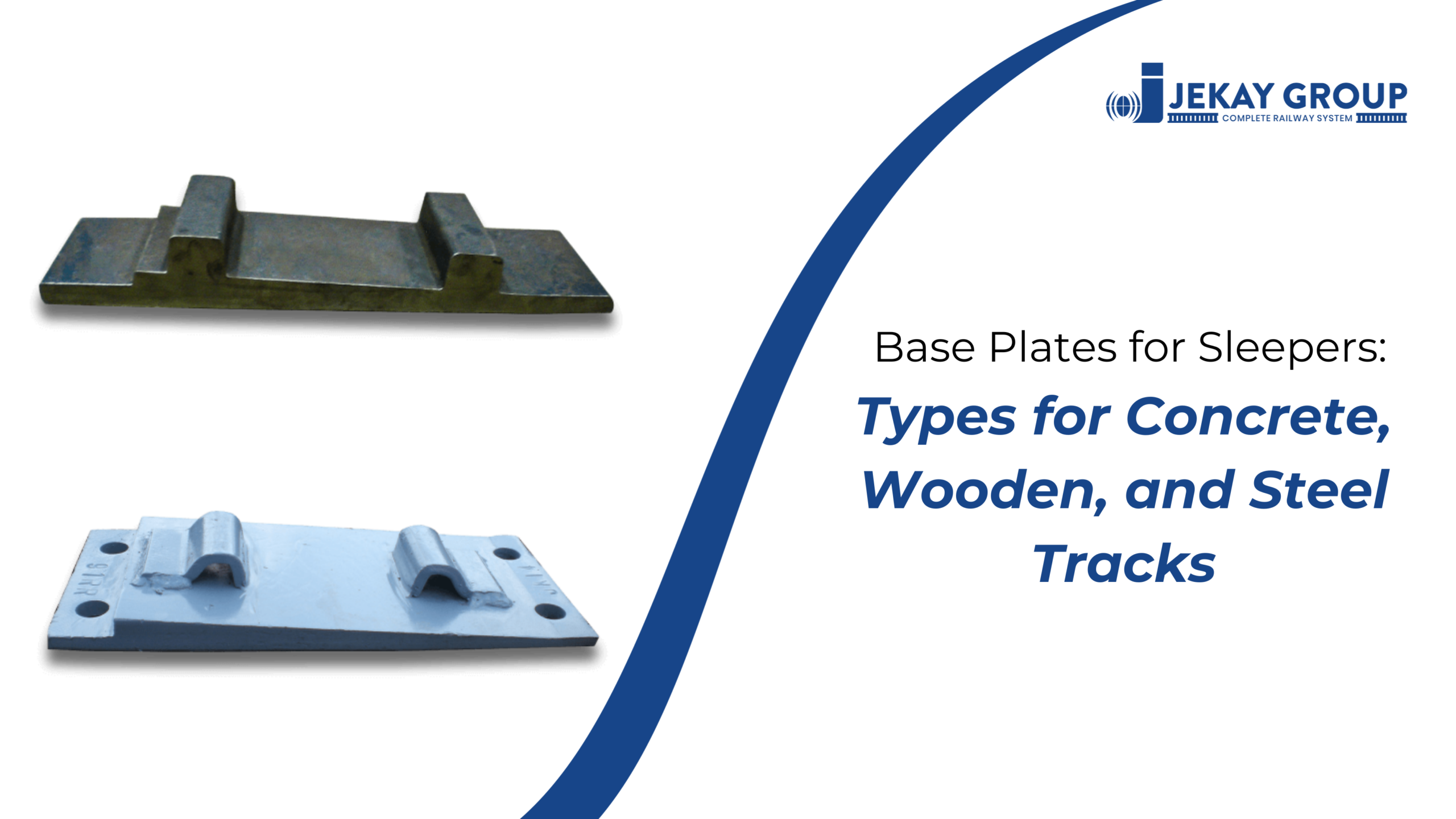
Base plates (also called tie plates or sole plates) sit between the rail and sleeper, transferring vertical and lateral loads across a larger bearing area. Without them, concentrated rail loads would indent or crush sleeper surfaces, creating uneven track geometry.
They protect sleepers from mechanical wear caused by repeated wheel loads and dynamic forces. A properly designed base plate can extend sleeper life by 30-50% compared to direct rail-to-sleeper contact.
Base plates maintain rail gauge and cant angle through shoulder designs that resist lateral rail movement. They also reduce vibration transmission and track noise—particularly important in urban transit applications.
The right base plate prevents premature infrastructure degradation. The wrong one accelerates it.
Types of Railway Sleepers
Wooden Sleepers
Wooden sleepers dominated railway construction for over a century. They remain common on heritage lines, branch tracks, and regions with abundant timber supply. Wood offers natural resilience and easier spike-driving but requires preservative treatment and regular replacement every 12-20 years.
Concrete Sleepers
Concrete sleepers now account for over 70% of new mainline installations globally. They deliver superior longevity (40+ years), consistent dimensions, and resistance to environmental decay. Their rigidity demands precise base plate design to prevent stress concentrations.
Steel Sleepers
Steel sleepers serve specialized applications—mining railways, areas with timber scarcity, and extremely corrosive environments. They’re lighter than concrete, easier to transport, and recyclable. However, steel’s flexibility requires different load distribution strategies than rigid concrete.
Base Plates for Wooden Sleepers
Wooden sleeper base plates typically measure 6-10mm thick with bearing areas of 150-200 cm². The larger surface spreads loads across wood grain patterns to prevent fiber crushing.
Attachment relies on cut spikes, screw spikes, or coach screws driven directly into the wood. Base plates include pre-punched holes or slots positioned for optimal holding power without splitting the timber.
Shoulders on wooden sleeper plates are often 15-20mm high to grip the rail base firmly. This prevents lateral creep under side forces from curve negotiation or braking.
Material choices include:
- Mild steel plates: Cost-effective for standard applications but require galvanizing or painting to prevent rust
- Cast iron plates: Durable and wear-resistant but brittle under impact
- Wrought steel plates: Higher strength-to-weight ratio for heavy-duty applications
Environmental challenges on wooden sleepers include moisture absorption that swells wood around fasteners, loosening connections over time. Regular inspection and re-tightening become essential maintenance tasks.
Base Plates for Concrete Sleepers
Concrete sleeper base plates are typically 8-12mm thick—slightly heavier than wooden counterparts to handle concrete’s rigidity. The increased mass helps absorb impact forces that would otherwise transfer directly into brittle concrete.
Two attachment approaches dominate:
- Cast-in base plates: Embedded during sleeper manufacturing, creating permanent mechanical anchoring through concrete embedment
- Surface-mounted plates: Attached via pre-cast anchor bolts or inserts, allowing replacement without sleeper removal
Cast-in designs eliminate installation labor but lock you into specific fastening system compatibility. Surface-mounted options offer flexibility at the cost of additional hardware and potential loosening over repeated loads.
Concrete’s alkaline environment accelerates corrosion of unprotected steel. Hot-dip galvanizing or epoxy coatings become mandatory rather than optional for coastal installations or chemical exposure zones.
Rubber or elastomeric pads between plate and concrete reduce vibration transmission and prevent localized concrete crushing under dynamic loads. Data shows padded plates reduce sleeper cracking by up to 35% on heavy-haul lines.
Base Plates for Steel Sleepers
Steel sleeper base plates must accommodate steel’s inherent flexibility—it deflects more under load than concrete. Plates typically feature larger bearing areas (up to 250 cm²) to distribute forces across the steel channel or trough profile.
Attachment uses bolts through pre-drilled holes in the steel sleeper frame. Shoulder heights often reach 20-25mm to compensate for steel’s reduced lateral stiffness compared to concrete.
Material requirements emphasize high-strength alloy steels to prevent plastic deformation where steel meets steel. Surface hardness becomes critical—plates softer than the sleeper wear rapidly, while excessively hard plates can damage sleeper profiles.
Anti-corrosion treatments for steel-on-steel applications differ from wood or concrete systems. Zinc-rich paints, phosphate coatings, or stainless steel fasteners prevent galvanic corrosion at metal-to-metal interfaces.
Materials and Manufacturing Methods
Q235 carbon steel dominates base plate production for standard applications. This economical material provides adequate strength for most passenger and light freight operations.
Higher-strength alloy steels (with tensile strength exceeding 600 MPa) serve heavy-haul corridors and high-speed lines where fatigue resistance matters more than upfront cost.
Manufacturing approaches include:
- Casting: Produces complex shoulder geometries and integrated features but yields slightly lower strength than wrought processes
- Hot rolling: Delivers superior grain structure and mechanical properties for flat plates with simple profiles
- Forging: Creates the highest-strength plates for extreme-duty applications but costs significantly more
Surface treatments protect against environmental damage. Hot-dip galvanizing provides 25-40 years of corrosion protection. Powder coating offers aesthetic options for visible installations. Bonded rubber pads add vibration damping.
Installation and Maintenance Considerations
Wooden sleeper base plates install faster—drive spikes through plate holes directly into timber. No pre-drilling required for most spike types, though pilot holes prevent splitting on hardwoods.
Concrete sleeper installations demand precise alignment. Cast-in plates require no field work beyond fastener tightening. Surface-mounted plates need torque control to avoid crushing concrete around anchor points (typically 150-250 Nm depending on fastener size).
Steel sleepers allow the most installation flexibility—bolt holes permit adjustment of rail position and cant angle in the field. Torque specifications typically range 200-300 Nm.
Maintenance frequency correlates with sleeper type:
- Wooden: Inspect every 6-12 months for loose spikes and plate movement
- Concrete: Check annually for cracked pads or anchor bolt tension
- Steel: Examine semi-annually for bolt loosening and wear at metal contact points
Track geometry measurement reveals base plate problems early. Sudden gauge widening or rail cant changes often trace back to failed or shifting plates rather than sleeper defects.
Choosing the Right Base Plate Supplier
Suppliers offering base plates for all three sleeper types demonstrate manufacturing breadth. This experience translates to better technical guidance when projects mix sleeper materials in transition zones or special trackwork.
Engineering support matters for non-standard applications—turnouts, expansion joints, bridge approaches. Manufacturers with in-house design teams adapt plate profiles to unique requirements without long lead times.
Quality certifications verify production consistency. ISO 9001 for quality management plus rail-specific approvals (RDSO for India, AREMA for North America, EN standards for Europe) confirm adherence to dimensional and material specifications.
Supply chain reliability includes material traceability. Each base plate should carry identification markings linking to production batch, material certificates, and test records.
Frequently Asked Questions
Q: Can I use the same base plate on different sleeper types?
A: No. Wooden, concrete, and steel sleepers require purpose-designed base plates. Attachment methods, bearing areas, and load distribution patterns differ fundamentally between materials. Using incompatible plates accelerates wear and causes premature failure.
Q: Why do concrete sleeper base plates cost more than wooden sleeper plates?
A: Concrete plates typically use thicker material, require corrosion-resistant coatings as standard, and often include bonded rubber pads. These features add 20-40% to manufacturing costs but deliver significantly longer service life in concrete track applications.
Q: How often should base plates be replaced?
A: Replacement frequency depends on track loading and environment. Wooden sleeper plates typically last 15-25 years before corrosion or wear necessitates replacement. Concrete sleeper plates can serve 30-40 years if properly galvanized. Steel sleeper plates may need replacement every 20-30 years in standard service.
Q: Do base plates for high-speed rail differ from conventional track plates?
A: Yes. High-speed applications demand tighter tolerances (within ±0.5mm), premium materials with superior fatigue resistance, and bonded elastomeric pads to reduce vibration. The design refinements typically add 40-60% to plate costs but prevent geometry degradation at operating speeds above 200 km/h.
Q: What causes base plates to crack or deform?
A: Common causes include overloading beyond design capacity, improper installation torque, material defects, and fatigue from repeated loading cycles. Concrete sleeper plates also crack when rubber pads deteriorate and no longer cushion impact forces. Regular inspection catches early signs before complete failure.
Conclusion
Base plate selection isn’t interchangeable across sleeper types—wooden, concrete, and steel each demand specific design features, materials, and attachment methods. Matching base plates to your sleeper material prevents premature failures, extends infrastructure life, and reduces maintenance costs. Analyze your sleeper type, load conditions, and environmental factors, then specify plates engineered for those exact requirements.
Ready to source base plates matched to your sleeper specifications? Contact our engineering team to discuss your track requirements and receive tailored recommendations.
Why Choose Jekay International for Base Plates Across All Sleeper Types
Since 1980, Jekay International has manufactured precision base plates for wooden, concrete, and steel sleepers serving railway projects in 13+ countries. Our comprehensive product range covers standard tie plates, cast-in base plates for concrete sleepers, and specialized high-strength plates for steel sleeper applications—all meeting RDSO, IRS, and international railway standards.
We provide technical expertise that goes beyond catalog specifications. Our engineering team analyzes your sleeper type, track loading, environmental conditions, and fastening system requirements to recommend base plates optimized for your specific infrastructure. Whether you’re installing concrete mainlines, upgrading wooden branch tracks, or deploying steel sleepers in mining operations, we deliver components proven across diverse operational environments.
Quality assurance includes dimensional verification, material testing, surface treatment validation, and full traceability documentation. From standard galvanized plates to bonded rubber-padded configurations for vibration-sensitive applications, Jekay combines manufacturing precision with real-world railway knowledge.
Discuss your base plate requirements with our technical specialists. Visit jekay.com or request specifications and project quotations directly through our website. Let four decades of railway component expertise support your track infrastructure projects.