
Introduction
Heavy-haul rail projects face a hidden risk that most operators overlook until it’s too late. Poor-quality base plates cause track instability, frequent maintenance shutdowns, and safety incidents that cost millions in downtime. The right manufacturer eliminates these headaches by delivering precision-engineered components that distribute extreme loads evenly and extend track lifespan by years. This guide walks you through the critical criteria for selecting a base plate manufacturer—from certifications and material quality to production capacity and post-sales support—so you can build infrastructure that performs under pressure.
Understanding Base Plates in Heavy-Haul Systems
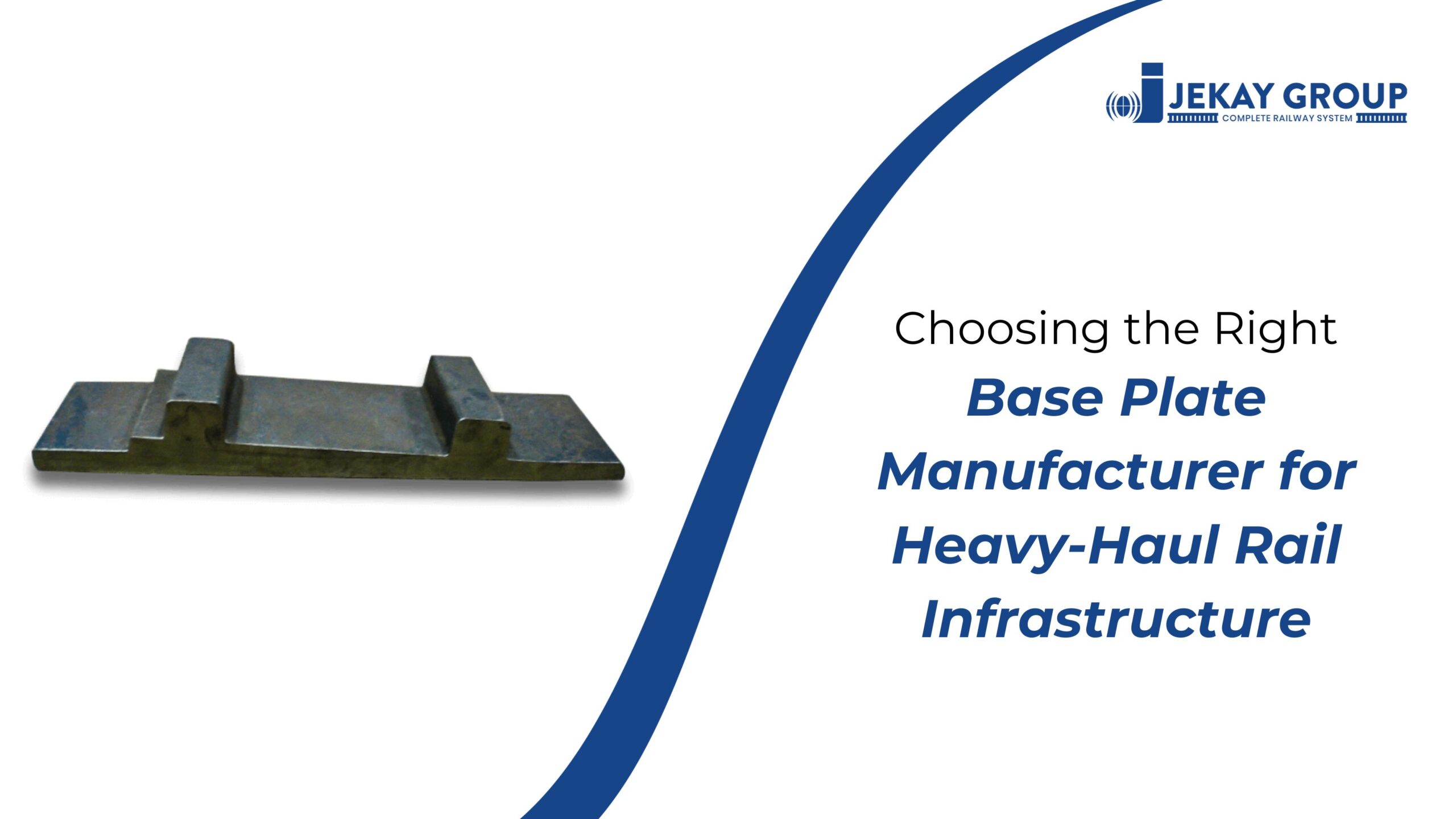
Base plates sit between the rail and sleeper, distributing locomotive weight across the track structure. In heavy-haul operations, axle loads often exceed 30 tons, creating dynamic forces that standard components can’t handle. These plates maintain gauge alignment and prevent rail movement during high-speed freight passage.
A single failure point triggers a chain reaction. Improper load distribution accelerates sleeper wear, causes rail misalignment, and increases derailment risk. Heavy-haul corridors demand base plates engineered to withstand millions of load cycles without fatigue cracking or dimensional changes.
Manufacturing Standards That Actually Matter
Certifications Beyond the Paperwork
ISO 9001 certification signals basic quality management, but heavy-haul projects require more. Look for RDSO approvals from Research Designs and Standards Organisation, which validates products against India’s stringent railway specifications. International compliance with IRS, UIC, DIN, and BS standards ensures compatibility across global rail networks.
These certifications aren’t decorative. They confirm that every batch undergoes destructive testing for tensile strength, impact resistance, and fatigue life.
Material Sourcing and Composition
High-grade raw materials form the foundation of reliable base plates. Manufacturers should use rolled or forged steel with documented chemical composition and mechanical properties. Carbon content, manganese levels, and alloy additions determine wear resistance and structural integrity under cyclic loading.
Ask suppliers for mill test certificates and material traceability. Cheap alternatives using recycled scrap or unverified sources fail prematurely in service.
Production Capacity and Technology
Automation Advantages
Modern base plate production relies on CNC planers, high-precision millers, and automated punching machines. These systems maintain uniform thickness within microns and ensure consistent hole placement for fastener compatibility. A surprising fact: manufacturers with fully automated high-pressure molding foundries can achieve 20,000 metric tons annual capacity while maintaining tighter tolerances than manual operations.
Automation also eliminates human error in dimensional accuracy. Base plates with uneven surfaces or misaligned bolt holes create stress concentrations that propagate cracks.
Quality Control Processes
Rigorous testing catches defects before installation. Look for manufacturers conducting ultrasonic testing, hardness verification, dimensional inspection, and corrosion resistance evaluation on every production batch. Statistical process control helps identify deviations early.
Finished products should show no surface cracks, scars, or laminations. Cold shear cutting with high tonnage produces smooth, clean edges without shrinkage cavities.
Product Range for Heavy-Haul Applications
Load Capacity Matching
Rail weight should be at least 2.75 times the axle load for optimal performance. Base plates must complement this ratio by providing adequate bearing surface area. Heavy-haul corridors typically require thicker plates with reinforced rib patterns to resist bending under extreme loads.
Standard plates work for conventional freight, but specialized designs handle the punishment of 100+ ton gross vehicle weights. Manufacturers offering customization can tailor dimensions and hole patterns for project-specific requirements.
Environmental Adaptability
Coastal regions, humid zones, and areas with chemical exposure demand corrosion-resistant base plates. Hot-dip galvanizing, specialized coatings, or stainless steel compositions extend service life in aggressive environments.
Temperature extremes also matter. Materials must maintain structural properties from -40°C to 60°C without becoming brittle or losing strength.
Innovation in Design and Sustainability
Enhanced Fatigue Resistance
Recent R&D advances focus on extending base plate lifespan through improved metallurgy and geometry optimization. Finite element analysis identifies stress concentration zones, allowing engineers to redistribute loads more effectively. This translates to fewer replacements and lower lifecycle costs.
Some manufacturers now achieve 40+ years of service life in heavy-haul applications—double the industry average from a decade ago.
Eco-Friendly Manufacturing
Sustainable practices reduce environmental impact without compromising quality. Energy-efficient foundry operations, optimized material usage, and responsible sourcing align with green infrastructure goals. Manufacturers implementing these practices often deliver better products because waste reduction requires tighter process control.
Critical Selection Criteria
Technical Support and Collaboration
The best manufacturers function as engineering partners, not just suppliers. They offer consultation on product selection, help interpret project specifications, and provide installation guidance. This support prevents costly specification mismatches.
Technical teams should respond quickly to field questions and offer customized solutions for unusual track configurations or loading conditions.
Logistics and Lead Times
Production capacity means nothing if delivery schedules slip. Evaluate manufacturers’ ability to meet project timelines, especially for large-scale orders. Domestic suppliers with strategically located facilities reduce transportation costs and enable faster response to urgent requirements.
Buffer stock availability matters for maintenance projects where downtime carries high opportunity costs.
Long-Term Value vs. Initial Cost
Cheap base plates become expensive through frequent replacement and track maintenance. Calculate total cost of ownership over 20-30 years, factoring in installation labor, traffic disruptions during replacement, and associated track component wear.
Premium products from established manufacturers typically cost 15-25% more upfront but deliver 3-5x longer service life. The math favors quality every time.
Real-World Performance Indicators
High-speed rail projects using precision-engineered base plates report 40% reduction in track geometry maintenance compared to standard components. Freight operators on heavy-haul corridors see extended rail life and fewer sleeper replacements when base plates properly distribute extreme axle loads.
Track stability improvements translate directly to operational efficiency. Smoother rides mean higher permissible speeds, increased axle loads, and better fuel economy.
FAQs
Q: What’s the minimum acceptable base plate thickness for 30-ton axle loads?
A: Heavy-haul operations require base plates 18-25mm thick depending on sleeper type and rail profile. Thinner plates risk permanent deformation under repeated loading. Consult engineering standards specific to your rail system and request load distribution calculations from manufacturers.
Q: How do I verify a manufacturer’s quality claims?
A: Request copies of RDSO approval letters, ISO certifications, and recent material test reports. Visit production facilities to observe quality control processes firsthand. Ask for reference projects in similar heavy-haul applications and contact those operators about long-term performance.
Q: Can base plates be customized for unusual track configurations?
A: Advanced manufacturers offer full customization including modified dimensions, specialized hole patterns, non-standard rail profiles, and enhanced corrosion protection. Provide detailed drawings and loading specifications. Expect longer lead times for custom designs but gain perfect fitment.
Q: What maintenance do base plates require?
A: Properly manufactured base plates need minimal maintenance beyond periodic inspection for cracks, corrosion, or displacement. Check fastener torque annually and examine plates during scheduled track maintenance. Replace immediately if cracks appear or dimensional changes occur.
Conclusion
Selecting the right base plate manufacturer determines whether your heavy-haul infrastructure thrives or fails under pressure. Focus on certifications, production technology, material quality, and proven performance rather than lowest bid pricing.
Visit jekay.com today to explore our complete range of precision-engineered base plates backed by 40+ years of railway infrastructure expertise, RDSO certification, and state-of-the-art manufacturing facilities—request a technical consultation and discover why leading rail operators trust our solutions for their most demanding heavy-haul projects.