
Introduction
Specifying the wrong fish plate for your track type creates immediate problems: premature cracking, loosened joints, and expensive emergency replacements. Yet 35% of joint failures stem from mismatched components—light-duty plates on heavy-haul lines or over-engineered designs inflating costs on low-traffic sidings. Light rail and heavy rail demand fundamentally different fish plate designs, materials, and bolt configurations. This guide clarifies those distinctions and shows you how to match fish plates to load demands, rail profiles, and operational environments. You’ll learn the mechanical differences, cost trade-offs, and selection criteria that prevent field failures and optimize your infrastructure investment.
What Are Light Rail Tracks?
Light rail refers to tracks with rail weights typically ranging from 8kg/m to 30kg/m. These lighter sections serve industrial sidings, mining operations, urban transit systems, and low-traffic branch lines.
Rail profiles like 9kg, 12kg, 18kg, and 22kg dominate light rail applications. The smaller cross-sections reduce material costs but limit load-bearing capacity.
Traffic characteristics differ markedly from mainlines. Light rail handles lower axle loads (often under 15 tonnes per axle), slower speeds (typically below 80 km/h), and intermittent service patterns rather than continuous heavy traffic.

What Are Heavy Rail Tracks?
Heavy rail encompasses rail weights from 38kg/m upward—commonly 43kg, 50kg, 52kg, and 60kg/m sections. These robust profiles form the backbone of mainline freight corridors, passenger networks, and high-speed routes.
The increased rail depth and web thickness distribute higher loads across larger contact areas. This prevents surface deformation and extends service life under demanding conditions.
Heavy rail supports axle loads exceeding 25 tonnes, speeds surpassing 160 km/h on passenger lines, and continuous traffic with minimal maintenance windows. The mechanical demands require correspondingly stronger connection systems.
Fish Plate Designs for Light vs. Heavy Rail
Bolt Hole Configurations
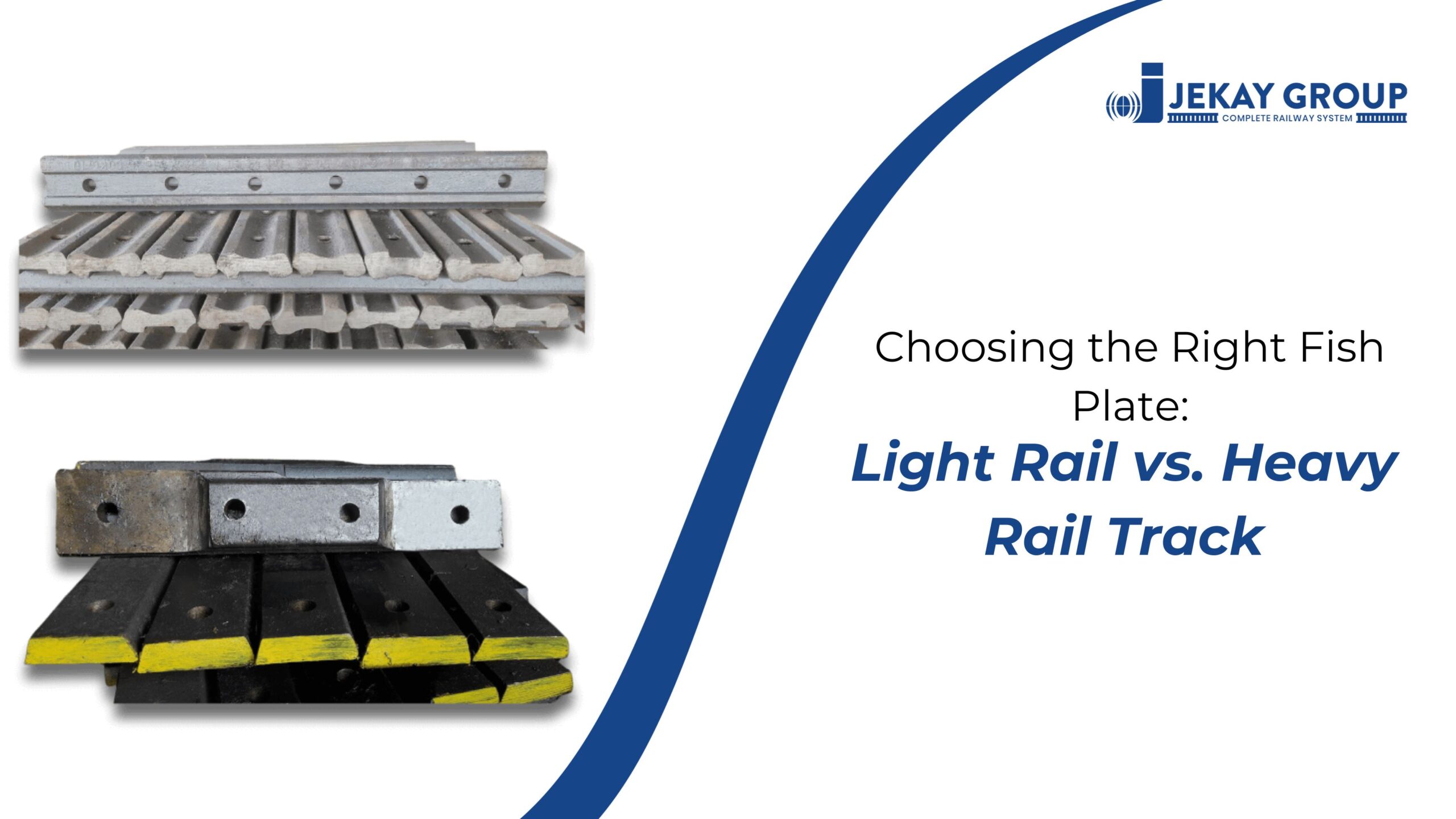
Light rail fish plates typically feature 4-hole patterns. The reduced bolt count reflects lower load transfer requirements and simplifies installation on tracks with limited maintenance access.
Heavy rail fish plates use 6-hole configurations as standard. The additional bolts distribute clamping forces more evenly and prevent stress concentration that accelerates fatigue cracking. Some ultra-heavy-duty applications specify 8-hole designs.
Dimensions and Profile Matching
Light rail fish plates measure shorter in length (commonly 400-500mm) and thinner in cross-section. A 12kg rail might pair with a plate weighing 1.5-2.5kg.
Heavy rail demands plates exceeding 600mm in length with proportionally greater thickness. A 60kg rail requires fish plates weighing 5-7kg each to achieve adequate stiffness and load distribution.
Profile geometry must match precisely. A fish plate designed for 52kg rail won’t fit 60kg rail—the bolt hole spacing, web depth, and flange angles differ by design.
Specialized Types
Both light and heavy rail use joggled, compromise, and insulated fish plates for specific applications. However, heavy rail versions incorporate reinforced sections and higher-grade materials to handle increased stress.
Materials Comparison
Light Rail Materials
Q235 carbon steel dominates light rail fish plate production. This economical material provides adequate strength for lower-stress applications while keeping costs manageable.
Cast iron appears in older light rail installations but lacks the ductility needed for modern service requirements. Most operators phase out cast iron in favor of steel alternatives.

Heavy Rail Materials
Ductile iron and alloy steels (containing manganese, chromium, or molybdenum) serve heavy rail applications. These materials resist deformation under high cyclic loads that would crack standard carbon steel.
High-strength steel grades with tensile strength exceeding 880 MPa handle extreme service conditions—heavy freight, high speeds, or demanding environmental factors. The material premium (typically 40-60% above standard steel) pays off through extended service life and reduced maintenance.
Corrosion-resistant coatings or stainless steel compositions protect components in coastal zones, chemical plants, or regions with aggressive de-icing practices.
Mechanical Properties and Performance
Heavy rail fish plates must absorb impact forces 3-4 times greater than light rail equivalents. A fully loaded freight car generates dynamic loads that far exceed static weight calculations.
Fatigue resistance becomes critical on heavy rail. Joints endure millions of load cycles annually—each passing wheel creates stress reversals that propagate microscopic cracks. High-strength materials and proper bolt preload prevent crack initiation.
Wear characteristics differ substantially. Light rail plates show gradual surface wear over decades. Heavy rail plates experience more aggressive wear on bolt holes and contact surfaces, requiring inspection every 6-12 months versus 2-3 years for light rail.
Service life expectations reflect these differences. Properly specified light rail fish plates last 15-25 years. Heavy rail components in demanding service might require replacement every 8-15 years despite superior materials—the operational intensity simply exceeds light rail conditions by an order of magnitude.
Standards and Specifications
Indian Railways specify IRS (Indian Railway Standards) profiles with RDSO approval for both light and heavy rail. Common heavy rail standards include IRS 52kg, IRS 60kg, and their corresponding fish plate specifications.
International standards vary by region. UIC (International Union of Railways) covers European applications, AREMA serves North American markets, and TB/T standards govern Chinese railway products.
Dimensional tolerances tighten for heavy rail. A light rail fish plate might allow ±2mm variation in bolt hole spacing. Heavy rail specifications typically limit tolerance to ±0.5mm to ensure consistent clamping force distribution.
Every compliant fish plate carries identification markings—manufacturer code, production date, material grade, and applicable standard. These marks enable traceability and quality verification throughout the component lifecycle.
Selection Criteria
Assessing Track Requirements
Start by identifying exact rail profile and weight. A 43kg rail requires 43kg-specific fish plates—substituting 38kg or 52kg components creates misalignment and premature failure.
Evaluate actual load conditions, not just rail weight. A 50kg rail on a heavy freight corridor demands higher-strength fish plates than the same rail profile on a lightly used passenger siding.
Operating speed influences selection. High-speed applications require tighter tolerances and superior materials even on medium-weight rails to minimize track irregularities at joints.
Environmental Factors
Coastal installations, chemical plants, and regions with harsh winters need corrosion-resistant fish plates regardless of rail weight. Standard steel plates corrode rapidly in aggressive environments, compromising joint integrity within 2-3 years.
Temperature extremes affect material selection. Rails in desert regions (exceeding 50°C) or arctic zones (below -40°C) experience thermal expansion and contraction that stresses fish plate bolt holes.
Cost vs. Durability
Light rail projects often optimize for upfront cost since replacement frequency remains manageable. Heavy rail demands lifecycle cost analysis—a premium fish plate costing 50% more but lasting twice as long delivers better economics.

Installation and Maintenance Differences
Light rail fish bolts require 200-350 Nm torque. Over-tightening damages smaller bolt holes and deforms thinner plates.
Heavy rail specifications demand 400-600 Nm torque to achieve proper preload. Under-torquing allows movement that rapidly loosens connections.
Inspection intervals reflect service intensity. Light rail joints get checked annually or biennially. Heavy rail demands quarterly inspection on freight corridors and semi-annual checks on passenger lines.
Choosing the Right Manufacturer
Suppliers with production capability across both light and heavy rail demonstrate manufacturing depth. This experience translates to better technical guidance during specification.
Customization matters for transition sections where light rail connects to heavy rail or for non-standard profiles common in industrial applications. Manufacturers with engineering support and flexible production adapt designs faster.
Quality certifications—ISO 9001, RDSO approval, and international railway credentials—verify consistent adherence to specifications. Request material certificates and dimensional reports to confirm compliance.
Frequently Asked Questions
Q: Can I use heavy rail fish plates on light rail for extra durability?
A: No. Heavy rail plates don’t fit light rail profiles—the bolt hole spacing, web depth, and flange geometry won’t match. The dimensional mismatch creates gaps that accelerate wear rather than improving performance.
Q: How do I identify if existing fish plates are light or heavy rail rated?
A: Check stamped markings on the plate surface showing rail profile compatibility (e.g., “52kg” or “IRS 60kg”). Bolt hole count provides a quick indicator—4 holes typically signal light rail, 6 holes indicate heavy rail. When in doubt, measure rail height and consult profile charts.
Q: What happens if I mix different fish plate standards on the same track?
A: Mixing standards creates inconsistent joint stiffness and load distribution. This accelerates wear on weaker components and can cause track geometry problems. Always use matching fish plates throughout a continuous rail section.
Q: Are insulated fish plates available for both light and heavy rail?
A: Yes. Both categories offer insulated versions for signaling circuits. Heavy rail insulated plates incorporate additional reinforcement to handle higher loads while maintaining electrical isolation between rail sections.
Q: How much does the cost difference between light and heavy rail fish plates impact project budgets?
A: Heavy rail fish plates typically cost 2-3 times more than light rail equivalents due to larger dimensions and higher-grade materials. On a per-kilometer basis, this translates to substantial differences—accurately specifying components prevents over-spending or under-performing.
Conclusion
Matching fish plates to track type isn’t optional—it’s fundamental to safe, economical railway operations. Light rail and heavy rail impose different mechanical demands that require purpose-designed components. Analyze your rail profile, load conditions, and service environment, then specify fish plates engineered for those exact requirements. The right choice prevents premature failures and optimizes lifecycle costs.
Need help specifying fish plates for your light or heavy rail project? Contact our technical team to review your track requirements and receive customized recommendations.
Why Choose Jekay International for Light and Heavy Rail Fish Plates?
With over four decades of railway track system expertise since 1980, Jekay International manufactures precision fish plates for both light and heavy rail applications across 13+ countries. Our comprehensive production capabilities span rail weights from 9kg/m industrial sidings to 60kg/m heavy-haul mainlines—all meeting RDSO, IRS, and international compliance standards.
We provide project-specific technical guidance to match fish plate specifications to your exact rail profile, load requirements, and operational environment. Whether you’re building urban transit systems, mining railways, or freight corridors, our engineering team ensures component compatibility and optimal performance.
Our quality assurance protocols include dimensional verification, material testing, and batch traceability for every fish plate we produce. From standard 4-hole light rail designs to reinforced 6-hole heavy-duty configurations, Jekay delivers components engineered for your specific track demands.
Discuss your fish plate requirements with our specialists today. Visit jekay.com or request technical specifications and project quotations directly through our website. Let proven railway infrastructure expertise guide your next track installation or upgrade.