
Introduction
Track joint failures cost rail operators millions in downtime and repairs each year. Yet 40% of these failures trace back to one avoidable mistake: choosing the wrong fish plate or fastener for the job. Whether you’re upgrading aging infrastructure or building new lines, the components connecting your rails determine safety, longevity, and maintenance costs. This guide walks you through everything you need to know—from understanding fish plate types to selecting fasteners that match your track profile, load requirements, and environmental conditions. You’ll learn how to avoid costly errors and make decisions that protect both your budget and your operations.

Understanding Fish Plates
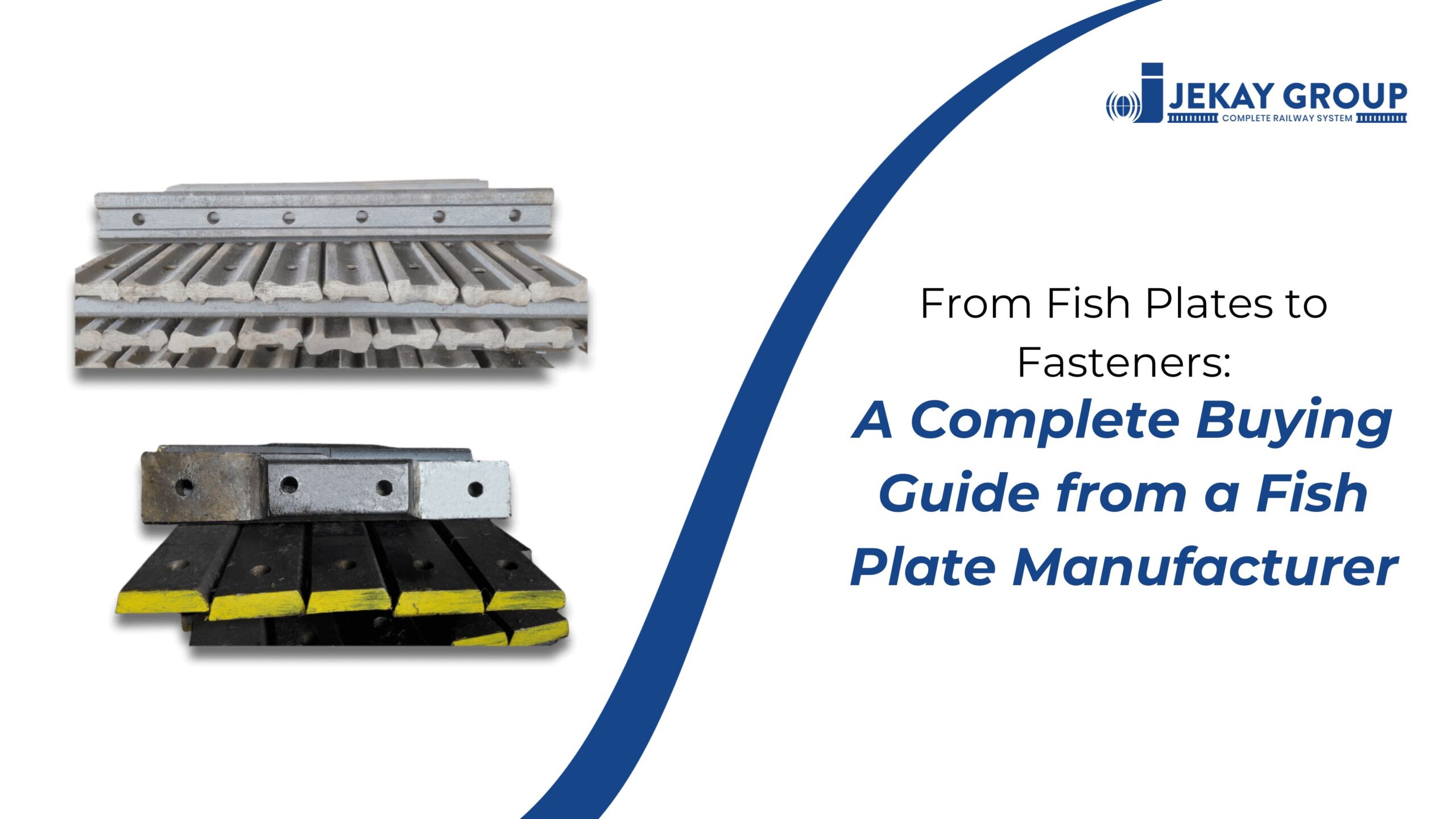
Fish plates (also called joint bars or rail splices) connect two rail ends to maintain track continuity. They transfer vertical and lateral loads while allowing controlled thermal expansion. Without them, rail ends would separate under load, causing derailments or track buckling.
The alternative—welded joints—eliminates fish plates entirely by fusing rails together. But welded joints demand specialized equipment and skilled labor. Fish plates offer flexibility for maintenance, easier replacement, and lower upfront costs.
Fish plates serve critical roles beyond mainline tracks. They’re used in sidings, yards, turnouts, and temporary track installations where quick assembly matters more than seamless rides.
Types of Fish Plates and Fasteners
Standard Fish Plates
These join straight rails of matching profiles. They’re the most common type, designed for flat-to-flat connections with uniform load distribution.
Insulated Fish Plates
These prevent electrical current flow between rail sections, essential for signaling circuits and track detection systems. They use non-conductive materials or insulating layers between metal components.
Joggled Fish Plates
Joggled plates feature offset ends to accommodate height differences between adjoining rails. They’re used when connecting rails of different wear levels or profiles.
Compromise Fish Plates
These connect rails of different weights or cross-sections. A compromise plate has asymmetric bolt hole patterns and dimensions to bridge mismatched profiles.
High-Strength and Alloy Options
For heavy-haul lines or high-speed corridors, alloy steel fish plates resist fatigue and deformation better than standard carbon steel. Stainless steel variants handle corrosive coastal or industrial environments.
Rail fasteners—including fish bolts, nuts, spring washers, and lock washers—complete the assembly. Matching fastener strength to fish plate material prevents weak points in the joint.

Materials and Manufacturing Process
Carbon steel dominates fish plate production due to cost-effectiveness and adequate strength for most applications. Alloy steels add manganese, chromium, or molybdenum for enhanced hardness and fatigue resistance.
Manufacturing starts with steel rolling or forging to shape the plate profile. Precision machining creates bolt holes at exact locations—misaligned holes by even 2mm can reduce clamping force by up to 15%. Heat treatment hardens the material, and surface finishing (galvanizing or painting) adds corrosion protection.
Quality control includes dimensional checks, hardness testing, and ultrasonic inspection for internal flaws. Reputable manufacturers mark each plate with traceability codes linking to production batch records.
Technical Specifications and Standards
Fish plate dimensions must match rail profiles precisely. A plate designed for 60kg/m rail won’t fit 52kg/m rail—the bolt hole spacing, web thickness, and plate depth differ.
Indian Railways follow RDSO specifications and IRS standards (Indian Railway Standards). International projects reference UIC (International Union of Railways), AREMA (American Railway Engineering and Maintenance-of-Way Association), or EN (European Norm) standards.
Buyers should verify compliance certificates. Standards specify minimum tensile strength (often 880-1080 MPa for high-strength plates), hardness ranges, and chemical composition limits.
How to Select the Right Fish Plate and Fastener
Start by identifying your rail profile and weight. Every rail section has a corresponding fish plate design. Using the wrong profile creates gaps that reduce contact area and accelerate wear.
Consider load and traffic type. Heavy freight demands higher-strength materials than light passenger traffic. High-speed lines require tighter tolerances to minimize track irregularities at joints.
Environmental factors matter. Coastal installations need corrosion-resistant coatings or stainless steel. Extreme temperature zones require materials that maintain strength across wide thermal ranges.
Price differences reflect material grade and manufacturing precision. A premium high-strength plate might cost 30-40% more than standard carbon steel but can last twice as long in demanding applications.
Customization options include modified bolt hole patterns, special coatings, or dimensional adjustments for unique track configurations. Suppliers with in-house engineering teams can adapt designs faster than those relying on third-party fabrication.

Installation and Maintenance Guidelines
Prepare Rail Ends
Cut rails cleanly with no burrs or rough edges. Uneven ends prevent full contact with the fish plate, creating stress concentrations.
Match Fasteners to Plates
Use bolts, nuts, and washers specified by the fish plate manufacturer. Mixing components from different systems can cause incompatibility—bolt diameters that are 0.5mm too small allow play, while oversized bolts stress hole edges.
Tighten to Specified Torque
Over-tightening strips threads or deforms plates. Under-tightening allows movement that loosens connections over time. Calibrated torque wrenches ensure correct clamping force, typically 400-600 Nm for standard rail bolts.
Inspect Regularly
Check joints for loose bolts, cracked plates, or rail end batter (mushrooming caused by impact). Industry data shows that joints in continuous welded rail (CWR) territories fail differently than those in jointed track, so tailor inspection routines to your track type.
Choosing the Right Supplier or Manufacturer
Experience counts. Suppliers with decades in the field understand nuances like regional rail profiles, climate-specific material requirements, and regulatory variations across markets.
Look for customization capability. Standard catalog items cover common needs, but complex projects often require modified designs. Manufacturers with engineering teams and flexible production can deliver tailored solutions without long lead times.
Certifications verify quality systems. ISO 9001 for quality management, ISO 14001 for environmental standards, and rail-specific certifications (RDSO, IRIS) demonstrate commitment beyond product specs.
Global supply networks reduce delivery risks. A manufacturer with multiple production sites or strategic inventory locations can respond faster to urgent orders or regional project demands.
Frequently Asked Questions
Can I use the same fish plate for different rail weights?
No. Each rail profile requires a matching fish plate design. Using mismatched components reduces contact area and accelerates joint wear.
How often should fish bolts be replaced?
Inspect bolts at every scheduled track maintenance cycle (typically every 6-12 months depending on traffic). Replace immediately if threads are stripped, shanks are bent, or corrosion is visible.
What causes fish plates to crack?
Common causes include fatigue from repeated loading, improper installation torque, manufacturing defects, and extreme temperature cycling. High-strength alloy plates resist cracking better than standard carbon steel in heavy-duty applications.
Are insulated fish plates as strong as standard metal plates?
Modern composite-insulated plates match or exceed standard plates in strength while providing electrical isolation. Verify that the manufacturer’s specifications meet your load requirements.
Do I need special tools for fish plate installation?
A calibrated torque wrench is essential for correct bolt tightening. Impact wrenches risk over-tightening. Grinders or cutting wheels may be needed to clean rail ends before fitting plates.

Conclusion
Selecting fish plates and fasteners isn’t just about matching dimensions—it’s about understanding load demands, environmental challenges, and long-term maintenance costs. The right components prevent joint failures, reduce downtime, and extend track life. Start by defining your rail profile and application requirements, then work with suppliers who can prove both manufacturing expertise and project support.
Ready to source fish plates and fasteners that meet your project specs? Contact our engineering team to discuss your requirements and get a customized quote.
Why Choose Jekay International for Fish Plates and Fasteners
With over four decades of proven expertise since 1980, Jekay International delivers precision-engineered fish plates and fastening systems to railway projects across 13+ countries. Our comprehensive manufacturing capabilities—from track fastening to turnouts and rolled sections—ensure complete compatibility across your rail infrastructure.
We combine innovative solutions with customer-centric service, offering customization for unique track configurations, global compliance with RDSO and international standards, and responsive technical support throughout project lifecycles. Whether you’re upgrading aging infrastructure or building new lines, Jekay provides the quality components and engineering knowledge that keep your tracks safe and operational.
Get in touch today to discuss your fish plate and fastener requirements with our technical team. Visit jekay.com or request a quote directly through our website.