
Introduction
Railway track failures cost operators millions in delays, repairs, and safety incidents each year. Most of these failures trace back to one overlooked component: the fishplate. Leading manufacturers have cracked the code on producing fishplates that keep rails aligned under extreme loads, temperature swings, and decades of continuous traffic. This guide breaks down exactly how top-tier fishplate makers guarantee track safety and durability through materials, processes, and quality controls. You’ll learn what separates standard joints from engineered solutions built to last.
What Makes Fish Plates Critical?
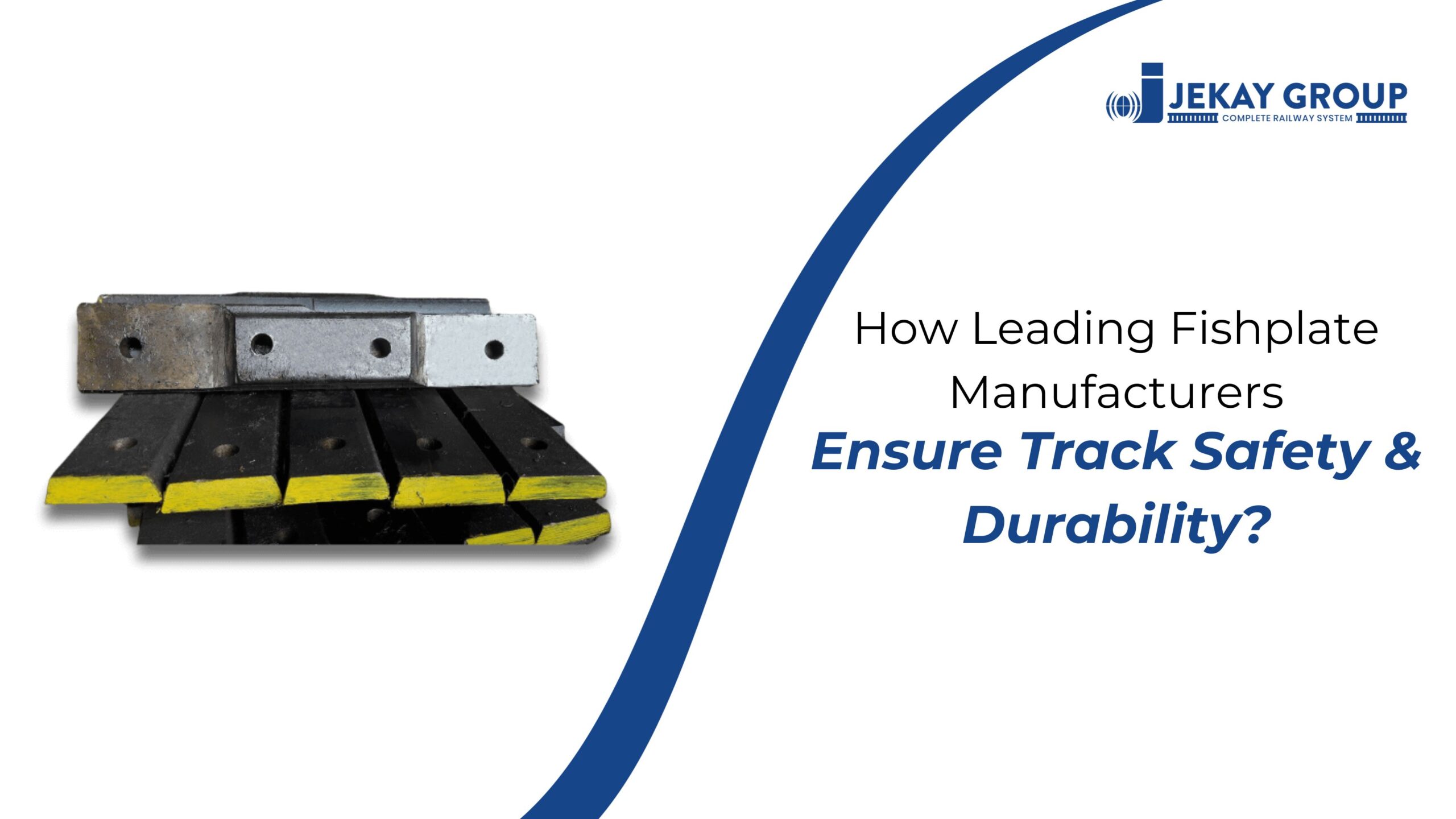
Fish plates connect two rail ends and transfer loads between them. Without proper connection, rails shift under weight, creating gaps that grow into cracks. The joint must handle vertical loads from passing trains, lateral forces from turning wheels, and thermal expansion that can shift rails by several millimeters.
Most track degradation starts at joints because that’s where alignment breaks first. A weak fishplate means accelerated wear on rails, fasteners, and even wheel profiles.
Material Selection Drives Longevity
High-Strength Carbon and Alloy Steels
Top manufacturers use killed steel made through secondary refining processes. This eliminates impurities that cause brittleness. The steel must meet minimum specifications:
- Ultimate tensile strength: 620 MPa minimum
- Yield strength: 320 MPa minimum
- Elongation: 15% minimum for flexibility under stress
- Hardness: 175 BHN minimum to resist wear
These numbers matter because they determine how the fishplate responds when a 25-ton axle load passes over it at speed. Lower-grade materials crack or deform permanently.
Grain Structure Specification
Advanced makers specify grain size 6 or finer per IS:4748-1988 standards. Finer grain structure means better toughness and fatigue resistance. This keeps the fishplate from developing micro-cracks that propagate over time.
Manufacturing Process Engineering
Forging and Rolling Under Controlled Heat
Billets get soaked above 950°C before hot rolling to achieve proper shape. The rolling must provide a minimum 3:1 reduction ratio from bloom to billet. This cold-works the steel and refines the internal structure.
After rolling, fishplate bars cool in draft-free environments below 300°C. Rapid cooling or exposure to drafts creates internal stresses that show up as cracks later.
Normalizing Heat Treatment
Every fishplate bar undergoes normalizing at 830-860°C followed by air cooling. This heat treatment:
- Relieves internal stresses from rolling
- Creates uniform grain structure throughout
- Standardizes mechanical properties across the batch
If hot punching or forming is needed, the component gets normalized again before final machining. This double treatment ensures no weak zones exist in the finished product.
Precision Machining and Hole Drilling
Holes are drilled, never punched, to avoid creating stress concentrations. Each hole gets chamfered to remove burrs that could initiate cracks. Position tolerances are tight:
- Hole diameter: +2.0mm / -0.0mm
- Center-to-center distance: ±2mm maximum deviation
- Thickness tolerance: +1.5mm / -1.0mm
These tight tolerances ensure bolts fit properly and load transfers evenly across all fastening points.
Multi-Layer Quality Assurance
Mechanical Testing on Every Batch
Manufacturers randomly select samples from each lot for destructive testing. Tensile tests verify strength and elongation meet minimums. Bend tests check that fishplates can deform 120° between bolt holes without cracking.
The bend test is particularly revealing. It simulates worst-case track settlement where the rail joint experiences extreme angular deflection. Fishplates that pass show they won’t fail suddenly under track irregularities.
Hardness and Macrostructure Analysis
Hardness testing happens on outer surfaces using the Brinell method. Results below 175 BHN indicate inadequate heat treatment. Macrostructure examination on etched cross-sections reveals internal defects, segregation, or improper grain flow.
Dimensional Verification
Every dimension gets checked against approved templates before dispatch:
- Overall length: ±2.0mm tolerance
- Height measured at center point of fishing surface
- Straightness: 0.16mm per 100mm horizontally, 0.10mm vertically
- End squareness: ±2mm
Templates are metal master gauges approved by inspectors at production start. This ensures dimensional consistency across thousands of pieces.
Surface Protection and Coating
Corrosion Resistance Through Treatment
Advanced manufacturers apply hot-dip galvanizing or specialized coatings. This protects against moisture, rust, and chemical exposure from ballast and drainage. Untreated fishplates lose cross-sectional area to corrosion, weakening the joint.
Surface finish also affects bolt performance. Rough surfaces create point loading on fasteners, accelerating loosening from vibration.
Standards Compliance and Certification
Leading makers comply with multiple standards simultaneously:
- IRS specifications for Indian Railways
- AREMA standards for North American tracks
- UIC specifications for European networks
Each standard has different requirements for dimensions, materials, and testing. Manufacturers that certify to multiple standards demonstrate broader capability and quality systems that exceed any single requirement.
Types Engineered for Specific Applications
Standard vs. Specialized Configurations
Standard fishplates handle conventional rail joints on mainline tracks. Compromise fishplates connect different rail profiles during track upgrades. Insulated variants provide electrical isolation for signaling circuits.
Heavy-duty fishplates for high-speed or heavy freight lines use enhanced materials and larger cross-sections. These resist the higher dynamic loads and longer service intervals required by modern rail operations.
Maintenance and Inspection Integration
Design Features That Enable Monitoring
Properly manufactured fishplates make inspection easier. Smooth surfaces allow visual crack detection. Consistent dimensions mean inspection gauges work reliably. Chamfered holes prevent false positives when checking for bolt looseness.
Track crews need to detect problems before failures occur. Fishplates designed with clear surface finish and proper geometry let inspectors spot developing issues during routine walking inspections.
FAQs
Q: What causes most fishplate failures in service?
A: Inadequate material specifications and improper heat treatment account for the majority. Fishplates made from non-normalized steel develop internal stresses that crack under cyclic loading. Corrosion from lack of surface protection is the second major cause.
Q: How do you verify fishplate quality before installation?
A: Check for proper chamfering on all bolt holes, verify dimensional accuracy with gauges, and inspect surface finish for coating uniformity. Request test certificates showing tensile strength, hardness, and heat treatment records for the batch.
Q: Why do some joints fail faster than others on the same track?
A: Variation in fishplate quality within a single procurement batch causes this. Manufacturers without proper lot control mix pieces from different heat treatments or material grades. Inconsistent normalizing temperatures create different mechanical properties even in the same production run.
Q: Can fishplates be reused after rail replacement?
A: Only if inspection shows no cracks, bolt holes maintain original dimensions, and hardness testing confirms no material degradation. Most manufacturers recommend replacement because hidden fatigue damage isn’t visible externally.
Conclusion
Track safety depends on engineered fishplates manufactured to exact specifications with proper materials and heat treatment. The difference between adequate joints and reliable ones comes down to process control and quality verification at every step.
Jekay International Track Pvt. Ltd. manufactures fishplates that meet global railway standards through controlled material selection, precision heat treatment, and multi-stage quality testing. Our engineering ensures your track joints maintain alignment and strength through decades of service.
Ready to upgrade your track infrastructure with fishplates built for long-term reliability? Contact Jekay today for technical specifications and delivery schedules tailored to your railway network.