
The Modern Rail Dilemma and the Need for Next-Generation Parts
Rail networks are the backbone of seamless cargo and commuter traffic—yet infrastructure faults, costly maintenance, and rising demand have made reliability a tough promise to keep. Outdated track systems or second-tier replacements delay shipments, threaten safety, and bleed budgets dry. What does it take to keep a rail network running smoothly and profitably? The answer lies in sourcing the right parts—components that withstand heavy loads, offer exacting tolerances, and deliver predictability in tough environments. Jekay International stands out with four decades of expertise, a global export record, and an extensive catalogue of rail solutions.
In this post, we break down what makes Jekay’s railcar parts different, reveal the real engineering decisions behind their products, and show how operators gain resilience, efficiency, and assurance.
Precision-Reliant Parts That Move the Industry
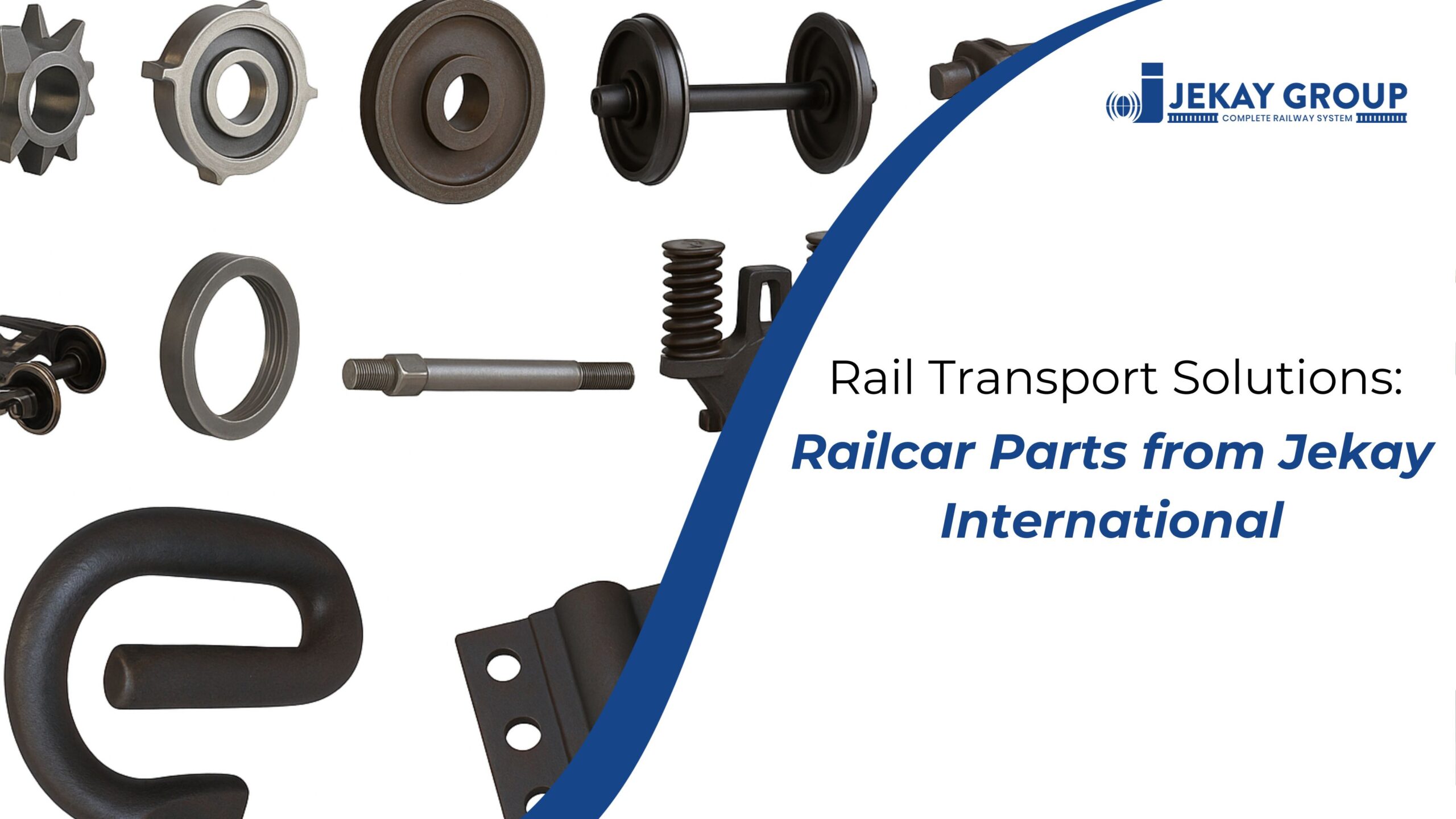
Modern railways depend on assemblies that do their job invisibly, shift after shift. Jekay International builds a large ecosystem of railcar parts, each designed for demanding rail lines:
- Base plates: These steel plates are crucial for distributing rail loads across sleepers. Jekay’s designs control wear and tear, offer exact alignment, and maintain track stability even on high-speed lines or heavy-freight corridors.
- Fish plates and joints: For strength and easy installation, their fish plates join rail sections, while glued insulated rail joints introduce vital electrical isolation for signaling reliability.
- Steel sleepers: Forged and rolled for lighter weight and dimensional accuracy, these reduce maintenance and handle both heavy axles and rapid transit conditions.
- Fasteners and fittings: Rail clips, bolts, and custom anchors maximize holding power, minimize movement, and reduce the frequency of checks and repairs.
- Custom parts: Sleeper shoulders, joggled plates for cracked rails, and turnouts to control directionality provide tailored solutions for special cases.
All of these are manufactured under one roof, streamlining supply for operators building new segments or fixing old ones.
Built for the Rail World: How Jekay’s Manufacturing Leads
Every rail operator wants long-term value and zero disruption. Jekay achieves this by investing in high-capacity automated lines that punch, roll, and forge with sub-millimeter accuracy. Highlights include:
- CNC-machined base plates and sleepers that offer consistent thickness and precise drilling.
- Special steel formulations for wear resistance—supported by in-house metallurgical labs.
- An annual output capacity that supports large-scale projects without stock-outs or last-minute sourcing concerns.
Inspection regimes include ultrasonic testing, fatigue simulations, and adherence to ISO, UIC, DIN, and Indian RDSO certifications. This gives procurement teams technical confidence when evaluating offers.
End-to-End Compliance and International Standards
In real-world operations, rail infrastructure is scrutinized for both safety and performance. Jekay’s base plates, joints, and fasteners are certified to national and international norms, and batch-tested for:
- Load-bearing strength
- Insulation resistance (for joints)
- Mechanical consistency under temperature swings and vibration
This global standards adherence enables straightforward approvals for both domestic projects and for export to Africa, Europe, the Middle East, and Southeast Asia.
Track Problems, Engineering Solutions: What the Data Says
- A recent Indian infrastructure survey found that base-plate misalignment is responsible for one-third of unscheduled track maintenance.
- Operators switching to Jekay’s CNC-engineered base plates reported up to 25% fewer service interruptions and significantly smoother rides in the first year.
- Customized fish and joggled plates for track repairs halved downtime compared to field modifications with standard plates.
These numbers clarify: in rail, targeted engineering equals less drama, more uptime, and budget certainty.
Fitted for Diverse Rail Environments
No two rail lines face the same mix of stress—climate, load, and geometry. Jekay tailors parts to fit:
- Coastal and humid regions: Corrosion-resistant metals and surface treatment protocols ensure long product life.
- Heavy axle freight lines: Specialty fasteners and sleepers sustain larger impact loads.
- High-speed sections: Base plates and joints that maintain alignment at extreme speed differentials.
This customization on short timelines helps clients match up with the rest of their network’s mix of legacy and new components.
Why Jekay Parts Stand Out—The Edge in Upgrades
Jekay focuses on measurable benefits for rail operators:
- Less frequent, less costly maintenance
- Supply reliability due to large-capacity manufacturing
- One-stop solution—no cobbling together mixed-supplier kits
- Direct access to in-house experts and engineering support for specialty requirements
These operational efficiencies—when built into procurement planning—translate to savings over the asset’s full lifecycle.
Real-World Results: Customer Integration and Project Wins
Recent integration stories show measurable returns:
- Urban metros replaced legacy steel sleepers with Jekay’s lighter designs and cut both track-laying time and later maintenance.
- National projects adopted advanced insulated rail joints for more reliable signaling—reducing service disruptions in challenging climates.
- Fast execution of export orders with project-driven customization eliminated costly shipping or retrofitting delays.
Projects using Jekay’s parts report faster commissioning, fewer unplanned interventions, and a rapid ROI.
Frequently Asked Questions
Q: What types of railcar parts does Jekay International supply?
A: Jekay produces base plates, fish plates, steel sleepers, glued insulated rail joints, fasteners (bolts, clips, anchors), joggled plates, and custom components for special track requirements.
Q: How does Jekay ensure the quality of its parts?
A: Parts are manufactured using CNC machinery, undergo rigorous in-process and batch-end testing, and comply with all major global railway certifications, including ISO and UIC standards.
Q: Is customization available for unique track conditions?
A: Yes, Jekay offers bespoke production for features such as insulation thickness, special alignment needs, or corrosion resistance, working directly with client specifications.
Q: What advantages do Jekay’s steel sleepers offer over concrete or wood?
A: Steel sleepers are lighter, more dimensionally precise, and handle both higher speeds and greater loads. They often last longer and require less maintenance, especially in tough or variable climates.
Q: How fast can Jekay deliver orders for new rail projects?
A: Thanks to high-capacity automated production, Jekay is able to fulfill both bulk and customized orders on short timelines, supporting major upgrades and fast-track projects.
Q: Are Jekay’s products used outside of India?
A: Jekay exports a full range of railcar components globally, with confirmed projects in Africa, Europe, the Middle East, and Southeast Asia, meeting international technical standards.
The Bottom Line: Upgrade Rail, Cut Downtime
Reliable infrastructure is built from the ground up—starting with the smallest engineered detail. Jekay International’s railcar parts have proven themselves trackside, helping customers cut both risk and cost. Ready to keep up with demand and push railways forward, Jekay invites operators to engage, try the difference, and see what top-tier component engineering truly delivers.
Discover Jekay International’s promise: parts that last, supply that adapts, and expertise that delivers. Explore the full range at Jekay.com, request a consultation, or get technical details for your next rail upgrade today.