
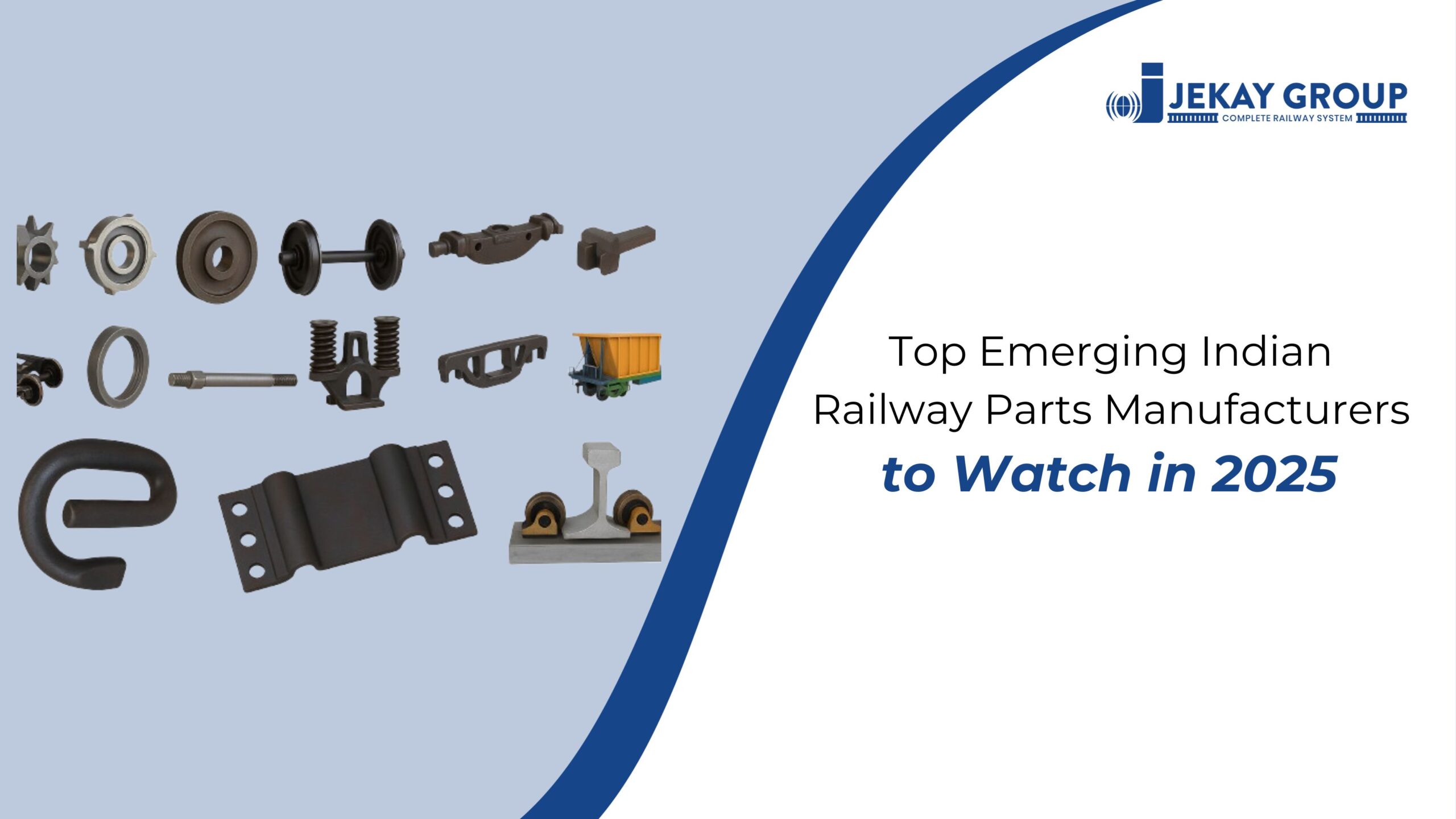
India’s railway sector is undergoing a transformation unlike any before, driven by an ambitious modernization agenda, electrification push, and a surge in domestic manufacturing. The Indian Railways, one of the world’s largest rail networks, is evolving into a high-tech, self-reliant powerhouse. This renaissance is fueled by government initiatives such as “Make in India” and Atmanirbhar Bharat, which aim to reduce import dependence and foster homegrown innovation. The rail components market, projected to reach USD 131.1 million by 2032 with a CAGR of 4.55%, is a testament to this momentum.
Emerging manufacturers are not just filling gaps; they are redefining the landscape with cutting-edge technology, sustainable practices, and strategic collaborations. For entrepreneurs and industry stakeholders, understanding these rising players is key to tapping into a sector poised for explosive growth and global relevance. As one industry expert puts it, “The Indian rail components market is on an upward trajectory, driven by government initiatives, technological innovation, and significant infrastructure projects.”
Understanding the Railway Parts Ecosystem: Core Components and Innovation Drivers
The railway parts ecosystem is a complex web of components that keep trains running safely, efficiently, and comfortably. From rolling stock parts such as bogies and couplers to track systems including rails and fasteners, each element demands precision engineering and robust quality control. Signaling equipment and electrification modules are increasingly digital and automated, enhancing operational safety and energy efficiency. Passenger amenities, once an afterthought, now incorporate eco-friendly materials and smart designs to improve traveler experience.
Innovation is the engine driving this ecosystem forward. Advanced materials like high-strength alloys and composites reduce weight and enhance durability. AI and IoT integration enable predictive maintenance and real-time monitoring, minimizing downtime and operational costs. This convergence of technology and manufacturing expertise is creating a fertile ground for emerging companies to challenge incumbents and carve out niche leadership.
Government Policies and Market Dynamics Fueling New Entrants
India’s policy landscape is a powerful catalyst for emerging railway parts manufacturers. The Production-Linked Incentive (PLI) scheme specifically targets train component manufacturing, offering financial rewards based on output to boost domestic production. This initiative complements the broader “Make in India” campaign, which has already attracted significant foreign direct investment and fostered joint ventures between Indian firms and global players.
Market dynamics also favor new entrants. The Indian Railways’ ambitious infrastructure projects—such as the redevelopment of over 1,300 stations under the Amrit Bharat Station Scheme and the expansion of high-speed corridors—translate into soaring demand for quality components. Private sector participation is increasing, with startups and SMEs innovating rapidly to meet specialized needs. As one analyst notes, “Supply bottlenecks exist for about 240 railway components, and only a handful of suppliers exist for many key components. This creates an immediate and very strong potential business opportunity.”
Profiles of Promising Emerging Manufacturers and Startups
Several emerging manufacturers and startups are making waves in 2025, demonstrating agility, innovation, and strategic vision.
- Titagarh Rail Systems–Sidwal SPV: This joint venture exemplifies the power of collaboration, focusing on manufacturing passenger car components with a capacity to meet domestic and export demands. Their integration of advanced manufacturing techniques and quality assurance protocols is setting new benchmarks.
- Uniproducts India Limited: Partnering with Integral Coach Factory (ICF) Chennai, Uniproducts is supplying sound and thermal insulation materials for the Vande Bharat Express, showcasing how specialized components contribute to high-speed train performance.
- Wabtec Locomotive Private Limited: A joint venture between Indian Railways and Wabtec Corporation, this entity is manufacturing Evolution Series ES43ACmi Locomotives in Bihar, with plans to export to Africa, signaling India’s growing footprint in global rail markets.
- Ramkrishna Forgings and Titagarh Rail Systems Consortium: Expected to start producing forged wheels for Vande Bharat trains in 2025, this facility will churn out 250,000 units annually, a significant stride toward self-reliance in critical components.
- Startups Supported by Indian Railways Innovation Policy: Since 2022, Indian Railways has backed startups developing solutions like rail stress monitoring, broken rail detection, and lightweight wagons. These ventures are rapidly moving from prototypes to scalable products, supported by government funding and intellectual property rights protection.
These examples illustrate a vibrant ecosystem where innovation, quality, and scale converge to meet the sector’s evolving demands.
Technological Differentiators and Competitive Advantages
Emerging manufacturers are leveraging technology to differentiate themselves in a competitive market. AI-driven quality control systems detect micro-defects during production, ensuring components meet stringent safety standards. Advanced composites and eco-friendly materials reduce weight and carbon footprints without compromising strength. Predictive maintenance solutions, powered by IoT sensors embedded in components, enable real-time health monitoring, minimizing unexpected failures.
One startup developed a modular interior system that reduces refurbishment time by 40%, a game-changer for fleet operators. Another innovator introduced a smart coupler with embedded diagnostics that alerts operators to alignment issues, enhancing safety and reducing downtime.
These technological advancements are not just incremental improvements—they represent a paradigm shift in how railway parts are designed, manufactured, and maintained. Entrepreneurs entering this space must prioritize R&D and digital integration to stay ahead.
Challenges and Strategic Opportunities for Emerging Manufacturers
While opportunities abound, emerging manufacturers face challenges that require strategic navigation. Meeting rigorous quality standards and obtaining certifications like ISO and AREMA can be resource-intensive. Scaling production to meet large orders demands capital investment and supply chain robustness. Competition from established players and imported components remains fierce.
However, niche segments offer fertile ground. Metro rolling stock components, high-speed rail parts, and specialized freight solutions are areas where innovation and customization can command premium value. The government’s focus on eliminating supply bottlenecks creates openings for manufacturers who can deliver reliability and cost-effectiveness.
Entrepreneurs should also consider partnerships with established firms like Jekay International Track Pvt. Ltd., which offers expertise in track components and material science. Such collaborations can accelerate market entry and enhance credibility.
Jekay International Track Pvt. Ltd.’s Role and Synergies with Emerging Manufacturers
Jekay International Track Pvt. Ltd. exemplifies excellence in Indian railway component manufacturing, particularly in high-strength, durable track systems engineered for diverse climatic conditions. As India’s railways embrace electrification and high-speed operations, Jekay’s products are integral to ensuring safety and longevity.
Emerging manufacturers can benefit from aligning with Jekay’s expertise in corrosion-resistant materials, precision engineering, and digital diagnostics. Joint ventures and knowledge-sharing initiatives can foster innovation and expand market reach. Jekay’s commitment to sustainability and quality complements the ambitions of startups seeking to disrupt traditional models.
Such synergies are not just beneficial—they are essential for building a resilient, competitive Indian railway manufacturing ecosystem capable of meeting 21st-century demands.
Future Outlook: The Road Ahead for India’s Railway Parts Manufacturing Landscape
Looking forward, India’s railway parts manufacturing sector is poised for exponential growth. By 2030, the sector is expected to integrate more AI, robotics, and sustainable materials, driving efficiency and reducing environmental impact. Export opportunities will expand as Indian components gain global recognition for quality and cost-effectiveness.
Policy support will remain critical, with ongoing incentives fostering innovation and capacity building. The convergence of government vision, private sector dynamism, and technological advancement will shape a new era of self-reliance and global leadership.
Entrepreneurs entering this space must embrace agility, invest in cutting-edge technology, and cultivate strategic partnerships to capitalize on these trends.
Conclusion: Empowering India’s Rail Infrastructure Through Emerging Manufacturing Excellence
India’s railway parts manufacturing sector is no longer a backdrop—it is center stage in the country’s infrastructure renaissance. Emerging manufacturers are not just suppliers; they are innovators, collaborators, and growth drivers. Their ability to blend technology, quality, and scalability will determine India’s success in building a world-class rail network.
For entrepreneurs eager to deepen their knowledge and seize opportunities, the message is clear: the future belongs to those who innovate relentlessly, collaborate strategically, and execute flawlessly. As India races toward a modern, electrified, and sustainable rail system, its emerging manufacturers are the engines powering this journey.