
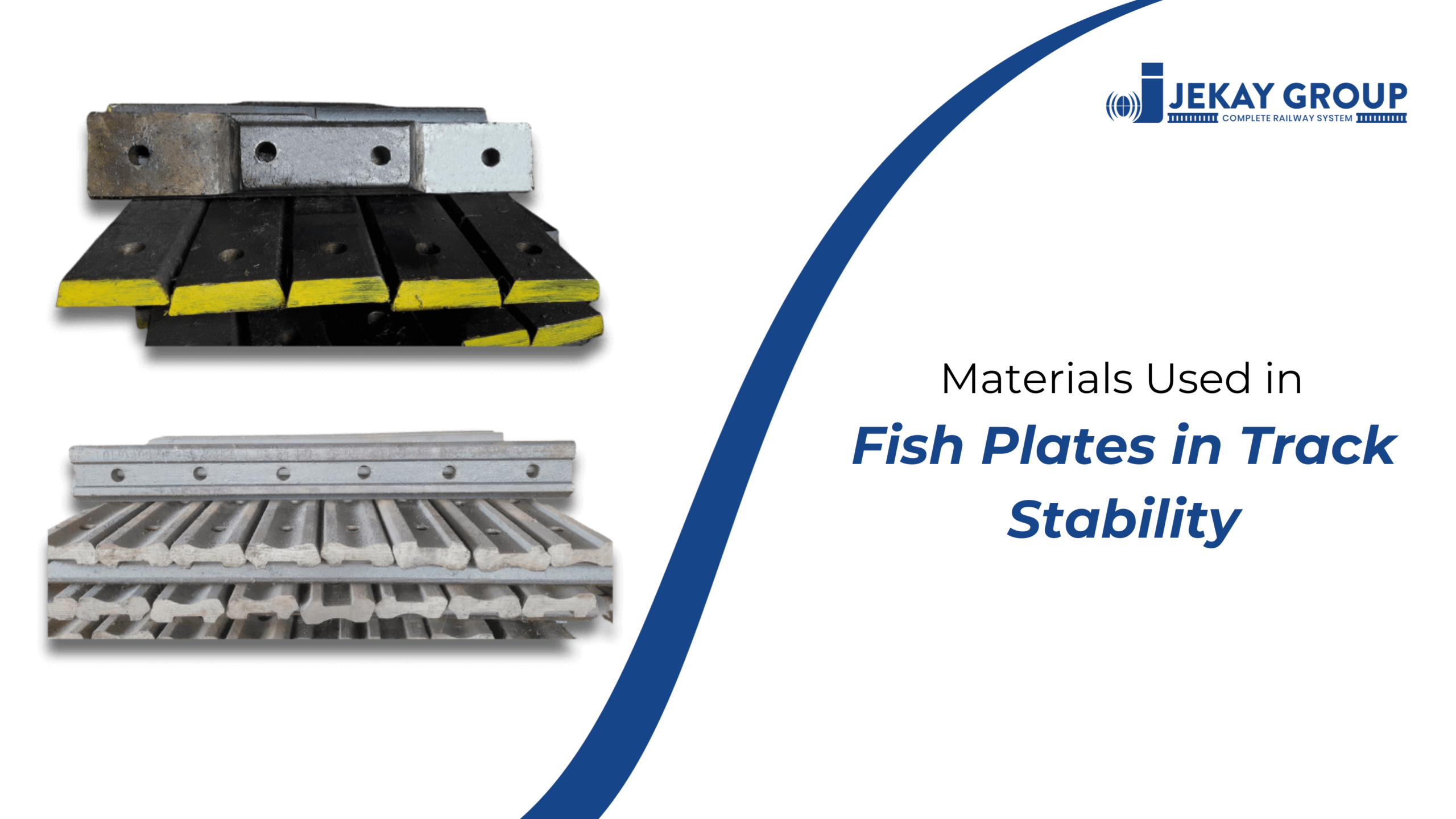
Rail and sleepers get all the attention, but the component sitting between them decides whether a track holds its geometry for decades or drifts out of alignment within a few years. That component is the base plate, and its performance comes down almost entirely to one decision: what it’s made from. Get the material wrong and you’re looking at deformation, loosened fastenings, and recurring maintenance long before the rest of the track shows wear.
This post walks through the materials actually used in base plate manufacturing, how each performs under real traffic loads, and what to check before you specify one for your project.
What Is a Base Plate
A base plate — also called a tie plate or sole plate — sits between the rail foot and the sleeper. It spreads the wheel load across a wider surface, keeps the rail locked to the correct gauge, and gives the fastening system a stable platform to clamp onto. Without it, the full weight of every passing axle would concentrate directly onto a small point of sleeper surface, which no sleeper material handles well over time.
Where It Fits in the Fastening System
Base plates work with elastic clips, spikes, or bolts to hold the rail firmly in place. On wooden sleepers, the plate is fixed with rail spikes or track bolts through pre-drilled holes. On concrete sleepers, it typically interfaces with elastic fastening systems that clamp the rail foot directly against the plate surface.
Key Functions of Base Plates
A base plate does more than sit under the rail. It performs several jobs at once, and each one affects a different failure mode down the line.
Load Distribution
The plate spreads vertical wheel load over a larger contact area, which is exactly why an accurately manufactured plate reduces load concentration and slows degradation at the rail-sleeper interface.
Gauge and Alignment Maintenance
By holding the rail in a fixed lateral position, the base plate keeps gauge consistent along the length of the track. This matters more than most buyers assume — a plate that flexes or wears unevenly lets gauge creep, and gauge creep is one of the quieter causes of speed restrictions.
Vibration Damping
Base plates absorb part of the shock from each wheel passage before it reaches the sleeper. This reduces the cyclic stress the sleeper itself has to withstand, which extends sleeper service life as a direct side effect.
Fastening System Compatibility
Modern elastic fastening systems are designed around a specific plate geometry — hole spacing, shoulder height, seating surface. A plate that doesn’t match the fastening system precisely undermines the clamping force the whole assembly depends on.
Materials Used in Base Plate Manufacturing
Material selection is the single biggest lever on how long a base plate lasts under load. Four material families dominate current manufacturing.
Cast Iron
Cast iron remains the standard choice for stable, heavy-traffic environments. It offers high compressive strength, strong dimensional stability, and natural vibration-damping properties that make it well suited to freight corridors and high-axle-load lines. Base plates made from cast iron hold their structural integrity under sustained pressure without deforming, which is exactly what freight traffic demands over years of continuous loading.
Cast Steel and Rolled Steel
Where tensile strength and impact resistance matter more than pure compressive load — high-speed lines, metro systems with frequent acceleration cycles — steel is the better fit. Rolled steel also offers a lower-cost manufacturing route than casting, which matters at the volumes rail projects typically require.
Forged Carbon Steel
Forged low- and high-carbon steel grades — common designations include QT400-15, QT450-10, QT500-7, S275JR, and Q235 — are widely used where a balance of strength and manufacturability is needed. Forging produces a denser grain structure than casting, which translates into better fatigue resistance under repeated cyclic loads.
Composite and Plastic Materials
Glass-fibre reinforced polyamide and similar composites appear in specialized applications where weight reduction, electrical insulation, or corrosion resistance outweighs the need for maximum mechanical strength. These aren’t a mainstream replacement for metal plates on heavy-traffic lines, but they solve specific problems metal can’t.
Manufacturing Processes
The process used to shape a base plate affects its internal structure as much as the raw material does.
- Sand casting — cost-effective for high-volume production, well suited to cast iron and cast steel plates
- Hot forging — produces denser, more fatigue-resistant material, typically used for carbon steel plates
- Rolling — lower-cost route for steel plates, often used where volume and budget matter more than the highest fatigue performance
- Welded/fabricated construction — used where plate geometry or repair requirements call for built-up rather than single-piece construction
Material Selection Criteria by Application
The right material depends less on preference and more on what the track actually has to handle.
Traffic Type and Axle Load
Freight corridors with heavy, continuous axle loads favor cast iron or forged steel for their compressive strength and fatigue resistance. Lighter passenger-only lines have more flexibility in material choice, since peak loads are lower and less frequent.
Sleeper Material Compatibility
Wooden sleepers require base plates designed to distribute load without crushing the timber surface underneath — a mismatch here accelerates sleeper wear faster than most buyers expect. Concrete sleepers demand tighter dimensional tolerances, since the plate-to-sleeper interface has far less give than wood.
Track Type
Ballasted track and ballastless track put different stress profiles on the plate-sleeper connection, and specification should reflect that difference rather than defaulting to a single standard plate across both.
Base Plate Types and Configurations
Base plates aren’t interchangeable across rail sections and fastening systems, even within the same material family.
- Single shoulder plates — standard for lighter rail sections and general applications
- Double shoulder plates — typically specified for rails above 100 lbs, offering better lateral restraint
- Hole configurations — 2, 4, 5, 6, or 8-hole patterns depending on the fastening system and sleeper type
- Rail-section-specific sizing — matched to sections like UIC 60, UIC 54, RN 45, 90A, 100RE, 115-119RE, and 132-136RE
- Turnout-specific plates — hook twin tie plates (HTTP), used behind the switch where load conditions differ from plain track
Role in Long-Term Infrastructure Durability
The real test of a base plate isn’t how it performs on day one — it’s how it holds up after years of cyclic loading and environmental exposure. A plate that looks identical to a lower-grade alternative in the catalog photo can behave very differently after five years of freight traffic. This is where material choice quietly separates track systems that hold geometry from those that need repeated correction. The interface between plate and sleeper is where forces actually travel through the system, which makes it a poor place to economize on material grade.
FAQs
Is cast iron or steel better for base plates? Cast iron generally performs better under sustained compressive load and offers stronger vibration damping, making it a strong fit for freight corridors. Steel offers better tensile strength and impact resistance, which suits high-speed and metro applications with more dynamic loading.
Why do some base plates use plastic or composite materials? Composites like glass-fibre reinforced polyamide are used where electrical insulation, weight reduction, or corrosion resistance matter more than raw mechanical strength. They’re not a general substitute for metal plates on heavy-traffic lines.
Does sleeper material affect base plate selection? Yes — wooden sleepers need plates that distribute load without crushing the timber, while concrete sleepers require tighter dimensional tolerances at the plate-sleeper interface. Specifying the same plate across both sleeper types is a common and avoidable mistake.
What’s the difference between single and double shoulder base plates? Single shoulder plates suit lighter rail sections and general track, while double shoulder plates provide stronger lateral restraint and are typically used on rails above 100 lbs. The choice depends on rail section and expected lateral forces, not just cost.
How does manufacturing process affect base plate performance? Forging produces a denser grain structure with better fatigue resistance than casting, while casting offers a more cost-effective route for high-volume production. The right process depends on whether fatigue life or budget is the bigger constraint for your project.
Specify Base Plates Built for the Load They’ll Actually Carry
Jekay International Track Pvt. Ltd. has manufactured base plates and fastening components since 1980, produced to IRS, RDSO, EN, and UIC specifications with material grades and dimensional tolerances matched to actual rail section and traffic type — not a generic catalog default. Our promise is straightforward: base plates specified for the sleeper type, axle load, and fastening system you’re actually running.
Share your rail section, sleeper type, and traffic profile with our engineering team, and get a material and configuration recommendation built for your project.
